

By Joseph R. Castel







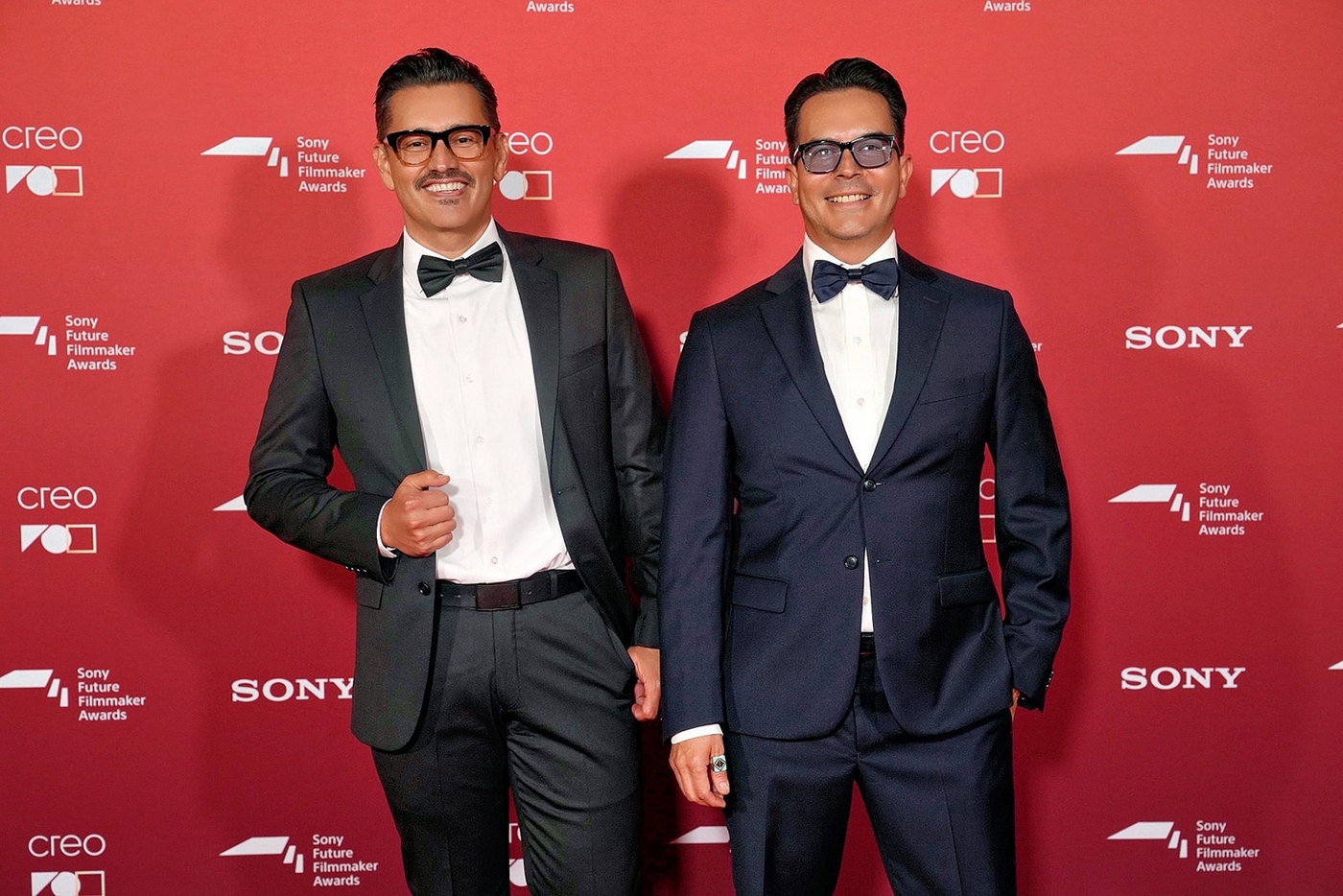
Film production at the Hollywood Studios have been on the skids for some time now as production companies are leaving Tinsel Town to work in other states, because it’s too expensive to make films here. However, there are two LA residents making movie history with their independent award-winning films. Together Miguel Angel Caballero and Luis Aldana have won more than 40 festival and cinema industry awards for their poignant pictorial short films. These Mexican-American filmmakers produce, write, direct, and sometimes star in their own films. They’re business partners from working-class, immigrant communities in Southern California, and their backgrounds deeply influences their storytelling. According to their website, “Their perspectives and narratives are often rendered invisible in television and film.”
However, before starting their own production company, Cabaldana Alchemy in 2018, Miguel and Luis started out as actors, both graduating from UCLA. Eventually, after many years of actor cattle calls, they realized that there just weren’t enough films being produced, written and directed by Latinos about the Latin experience, that would actually give Latino actors a shot at an acting career. Consequently, they moved behind the camera. They now give other actors opportunities to play multilayered characters in their films.
Their recent award-winning film, The Ballad of Tita and the Machines, (directed by Miguel) is an example of keeping their fingers on the pulse of what’s happening in America today. When Lesbiana migrant fieldworker, Tita, is told by a futuristic medical scanner that she’s unable to pick strawberries as fast as her younger co-workers, because of her arthritis, she’s forced to hire an android from an AI company that takes 60% of her paycheck. True to Latin humor, writers Miguel and Luis have the androids breaking down and literally burning out under various strenuous scenarios in which, ironically, farmworkers face every single day.
Miguel and Luis check off all the intrinsic complexities of a working-class woman: she’s queer, elderly and brown, an enigmatic symbol of Latin resistance, a walking rainbow-flavored bottle of Geritol. In addition to co-writing, Luis, amusingly, plays the naïve, benign AI representative.
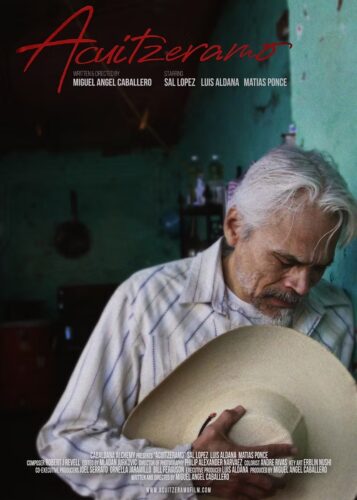
TITA was an Oscar® qualified sci-fi short that premiered at the Tribeca Festival. The indi-powerhouse duo’s earlier short film, Acuitzeramo, (2020), acquired by HBO MAX, also received critical acclaim for its heartfelt portrayal of two gay elders from a small Mexican village which won 21 awards, including the Imagen Award.
In addition to developing Tita into a feature film, Miguel and Luis are planning for their queer feature film debut this summer.
Having known the filmmakers for more than 15 years, Adelante sat down with them to talk about their up-coming film and the art of indie fundraising.
Adelante: Tell me what your new movie is about.
Miguel: Angel in Retrograde is about a 40-something guy who is involved in this brutal car accident. When he wakes up from a coma, he doesn’t remember his wife or teenage daughter. The only people that he remembers are his parents.
He’s diagnosed with retrograde amnesia, which means that everything past the age of 18 he can’t remember, but everything before that is still intact. It’s actually a clinical term called “retrograde amnesia,” where there’s a certain cutoff point, and everything after that time period, you don’t remember.
Angel comes back home with his wife and daughter, but soon realizes that he doesn’t fit in. As memories and flashbacks start to occur, he realizes that he’s been living his whole life in the closet, a false life. He then reaches out to a former high school friend, Joshua, whom he was in love with and starts making a connection with him again. The story deals with amnesia in a clinical way, but it also deals with amnesia in a voluntary way, meaning that we all have this condition in our lives in which we block out certain traumatic events that have happened to us, specifically within the queer community.
Adelante: Fascinating conception. Has a production company or studio gotten behind it?
Miguel: Everyone we’ve talked to loves the script. Just nobody wants to put the money into it because, it’s just very “risky.” If you don’t have a Pedro Pascal or an Oscar Isaac on board, then you’re screwed. So, we don’t have the financing yet. But we decided that we didn’t want to ask for permission to tell our story, specifically when it comes to our queer stories, our brown stories that are really hard to green light by a studio because of the lack of stars.
Luis: Miguel and I have done a feature film on a micro budget years ago. And after we had that experience, we told ourselves that the next project that we do, it would be nice to get paid. It’d be nice to pay people. It’d be nice to afford ourselves, like all those things that a lot of filmmakers get. But the state of the film industry in Los Angeles is just not conducive to that right now. So, we could sit around and wait another 3 to 5 years, you know, age out, or make it now.
Miguel: So that’s why we’re going the micro budget model route, like where it’s not a million dollars. We’re trying to shoot this for $350,000. We were really inspired by a micro budget model, based specifically on the Dogma 95 Movement with Danish filmmaker, Lars Von Trier. They kind of developed their own manifesto on how to do movies, and that was pretty much a rebellion against the studios in Sweden.
Luis: We have to go back to our roots. We know how to do this. We know how to get our hands dirty. Fortunately for us, being from Los Angeles, we have a lot of social capital, and it’s about activating all those connections that we have and pulling all our favors.
Miguel: Exactly. We’re having conversations with collaborators: cinematographers, producers and production designers – they all read the script. We’re very clear about the favored nations approach to this project (basically no party receives more money than another crew member or actor). And people have signed on. We also want to get our queer community behind it. To invest in it.
Luis: We’re living in a moment in time where it’s more important than ever to get stories like Angel in Retrograde to be produced and seen.
To watch The Ballad of Tita and the Machines or Acuitzeramo, visit:
https://vimeo.com/channels/1936627
For more info on the film/or company:
www.CabaldanaAlchemy.com