

By: Daniel P’Lopez


For Israeli filmmaker Doron Eran, making movies has always required a mixture of instinct, risk and persistence. His career began unexpectedly when a friend suggested that they start a production company, with Eran directing and his friend producing. Eran recalled raising the money for their first movie in only three days, partly through contacts introduced by his father-in-law.
The risk paid off. Their first movie became a hit, and the success of a second project convinced Eran that filmmaking was more than a lucky break—it was the beginning of his career.
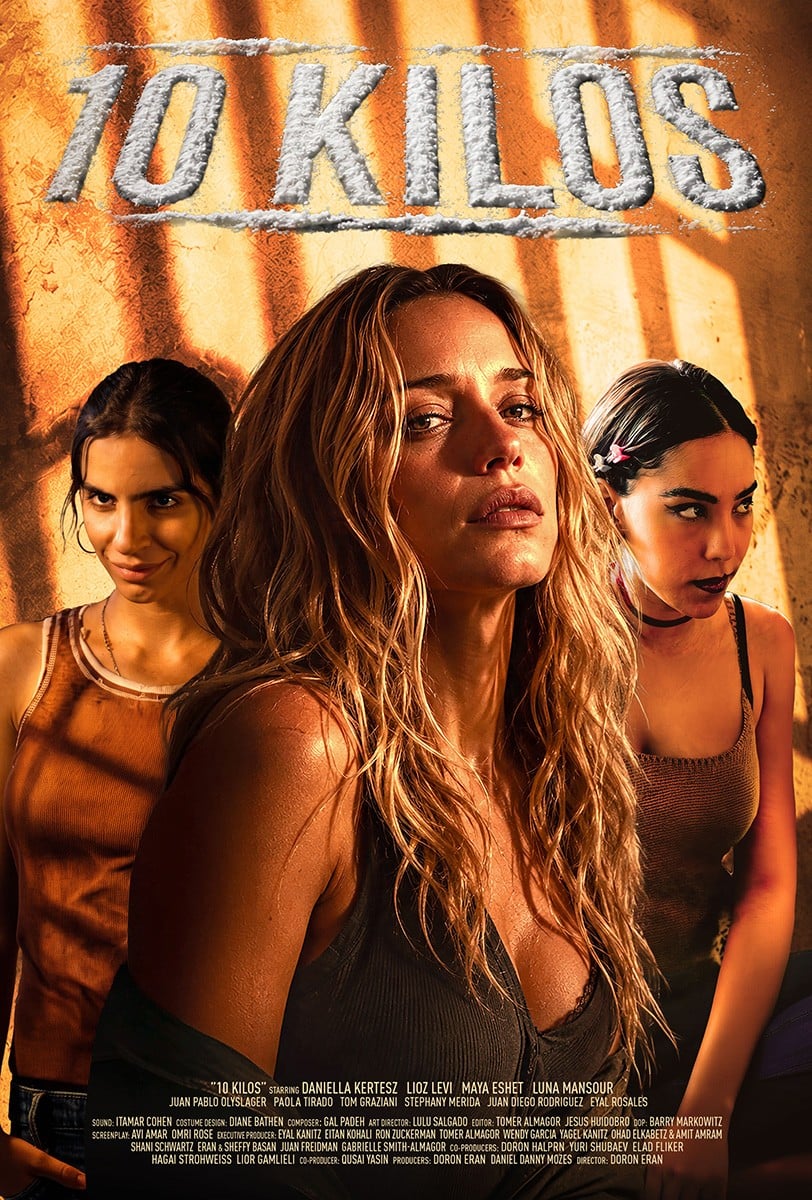
More than 25 years later, Eran has built an extensive career as a director and producer, but few of his projects have demanded the patience of 10 Kilos, a true-crime survival drama based on the bestselling memoir of Sharon Yitzhaki.
Eran first discovered Yitzhaki’s book, 10 Kilos of Cocaine, approximately 15 years ago. After reading it, he contacted her, and the two spoke for several hours about what she had experienced.
“I said, ‘Let’s make a movie,’” Eran recalled.
Turning that idea into a finished film took much longer than he originally expected.
“Every project has its own date and time,” he said.
For 10 Kilos, that time finally arrived after years of development, planning and attempts to find the right location.
The movie follows Sharon, played by Daniella Kertesz, a young Jerusalem woman who travels to Bolivia with a man she barely knows. When authorities discover 10 kilos of cocaine in luggage she says she never touched, Sharon is arrested and sentenced to years inside the notorious Mira Flores women’s prison in La Paz.
She enters the prison as a frightened outsider with little money and no knowledge of Spanish. To survive, she must quickly learn the unwritten rules of a world controlled by inmates, corruption and drug traffickers. She eventually becomes a media sensation, develops a relationship with the head of a drug cartel and rises within the prison’s drug operation.
Yet 10 Kilos is not simply about crime or power. Sharon also creates a chosen family within the prison, including an orphaned child and a transgender woman, played by Luna Mansour. Those relationships give the story emotional weight as Sharon struggles to protect the people she loves while also battling her own cocaine addiction.
Eran described Sharon as a fighter and said he gave Kertesz a clear image to keep in mind while playing her.
“I told the actress, ‘Think about Rocky,’” he said.
The comparison is not about physical strength alone. Like Rocky, Sharon is repeatedly knocked down, but she refuses to remain defeated. Her transformation is complicated: she begins as a victim, gains influence in a dangerous system and eventually risks becoming part of the very world that imprisoned her.
Sharon’s recovery becomes one of the most important parts of her journey. After recognizing the harm her addiction could cause the child and the family she formed, she makes the difficult decision to get clean.
Her eventual escape is just as extraordinary. Her chance for freedom came when a papal declaration of mercy opened a legal path that eventually helped her secure her release.
Bringing this story to the screen required an international production. Eran originally hoped to film in Bolivia, but complications forced him to search for another location. The production eventually moved to Guatemala, where the filmmakers worked with an international cast and crew and shot scenes inside a real women’s prison.
That setting helped give the film a sense of confinement and authenticity that would have been difficult to reproduce on a traditional soundstage. Yitzhaki also contributed her firsthand knowledge to the screenplay, helping the filmmakers understand the prison, its people and the emotional reality behind the events.
Along with Kertesz, the cast includes Maya Eshet, Lioz Levy, Luna Mansour, Tom Graziani and Juan Pablo Olyslager. The film blends Hebrew, Spanish and English, reflecting the international world in which Sharon’s story unfolds.
For Eran, the film also carries a warning, particularly for young viewers. Sharon’s nightmare begins with trust, a trip and a decision whose consequences she does not fully understand. Her story shows how quickly someone can be pulled into a dangerous situation—and how difficult it can be to escape once that world closes around them.
At the same time, 10 Kilos is ultimately a story of resilience. Sharon survives imprisonment, exploitation, addiction and the loss of control over her own life. She does not emerge untouched, but she reclaims her freedom and her voice, later telling her story in the memoir that inspired Eran’s film.
After a festival run that included screenings at Sedona, Sofia, Boca Raton and other international festivals, 10 Kilos opened in select U.S. theaters on August 21, in Los Angeles and in New York. The film is scheduled to become available on major digital platforms beginning September 29.
For Eran, finally releasing the film represents the completion of a journey that began 15 years ago with a book he could not forget. For audiences, it offers a tense and emotional reminder that survival is not always about remaining innocent. Sometimes, it is about finding the strength to endure, change and eventually find a way home.