

By: Joseph R. Castel


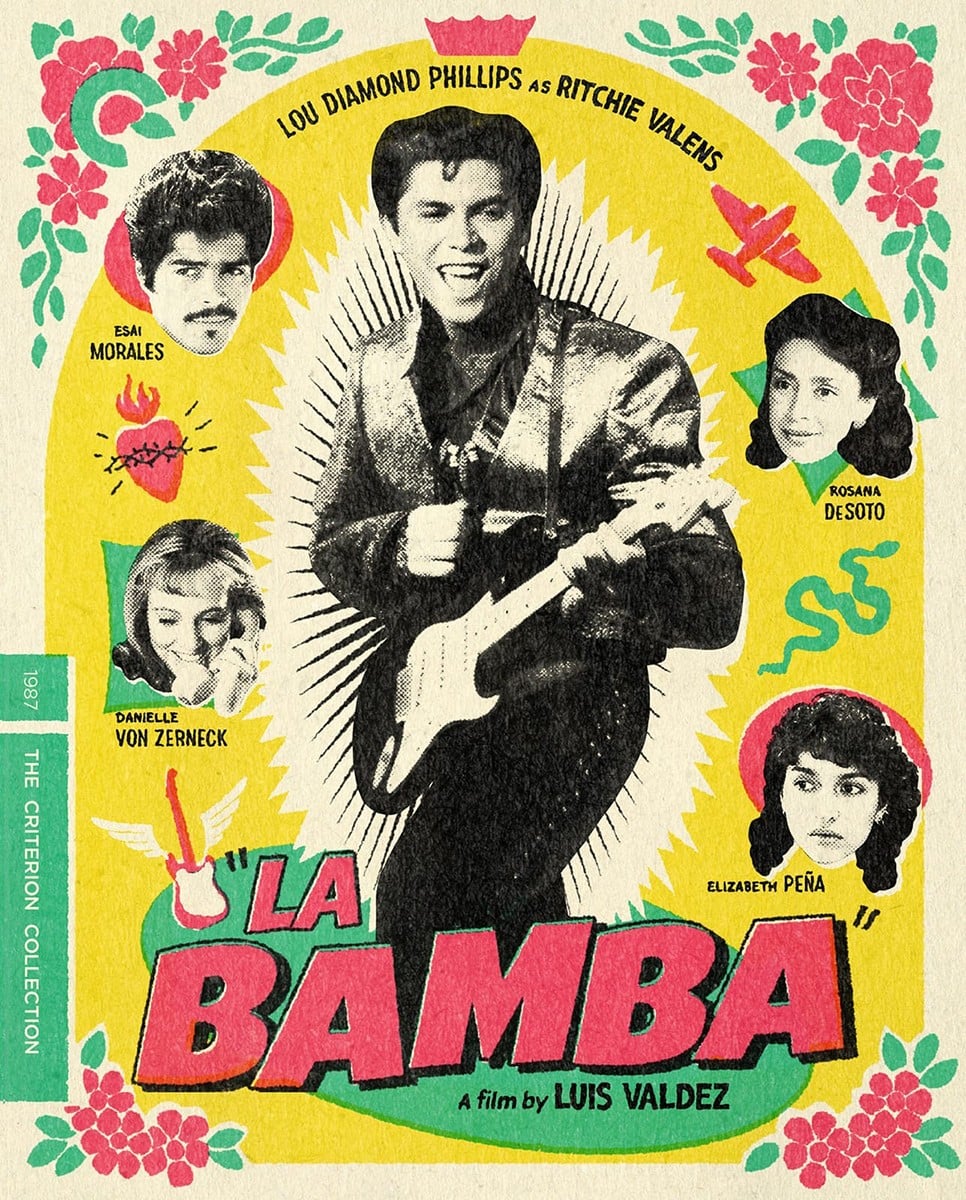
Just about everyone on the planet knows of “La Bamba,” the 1987, Ritchie Valens’ biopic of the Mexican American rock ‘n’ roller who died alongside Buddy Holly in a 1959, plane crash. Unfortunately, not everyone knows Luis Valdez, the name of the man who directed the movie. If Valdez is unknown to Latino audiences, perhaps it’s because the Delano, Cali native only had two major movie hits under his directorial belt, “La Bamba,” with Lou Diamond Phillips and “Zoot Suit,” starring Edward James Olmos. Both Cinematic ‘80s classics.
Valdez, 86, however, is more than just a film director. He’s a playwright, founder of El Teatro Campesino, a historian and an important figure of the Chicano movement. Then again, most people don’t know much about the political and cultural Chicano movement that took place among young Mexican Americans in the late 1960s and early ‘70s. That’s why a newly released documentary about Valdez’ life is such a milestone in cinematic history. Directed by David Alvarado, “American Pachuco: The Legend of Luis Valdez” chronicles the filmmaker’s life from migrant farmworker to Hollywood director. Alvarado’s other notable work includes the award-winning, “Bill Nye: Science Guy” and “We Are as Gods”.
Adelante interviewed Alvarado recently on why he chose to focus on the Chicano icon and why Valdez’ work is just important today as it was back in 1965.
Adelante: I was surprised to learn that no one had made a documentary about Luis Valdez, but then, artists behind the cameras seldom get the recognition they deserve. Why did you choose Valdez, and take on the task of revisiting the Chicano movement in your film?
Alvarado: Luis Valdez was a huge influential figure in my life and after my last documentary, I wondered if somebody had made a film about him, and I was blown away that nobody had even tried. So it was like a brick of gold, just sitting there, untouched.
Adelante: I like how the documentary details Valdez’ early career in 1965, when he would take flatbed trucks out to the countryside and produce political skits to entice farmworkers to join the unionized strike.
Alvarado: It was considered agitprop (political) theater that would actually activate people to join a cause. During this time period, through the work of Cesar Chavez and Dolores Huerta, the United Farm Workers (UFW) won their first ever Union contract for farmworkers in the United States.
Adelante: What would you say was your main challenge in getting the film made?
Alvarado: Independent funders were not interested in this documentary at all. They had no idea who Luis Valdez was, didn’t know what the term ‘Chicano’ meant. And so early on we went to PBS and to other foundations.
Adelante: Your film takes a massive leap in covering the Chicano Movement, such as the 1970 Chicano Moratorium in East LA, in which Valdez was present at.
Alvarado: I first heard the term “Chicano” when I met Luis, when I was 21 years old, and I was totally shocked. I had never even heard of that term before. I grew up in Texas, so I always identified as Hispanic. But then I heard ‘Latino’ and I liked that a little bit more. That’s what I’ve been calling myself most of my adult life. But then while in college, I heard Luis talk about the Chicano Movement and I became interested in it. The idea of ‘Chicano’ meaning someone with Mexican American heritage who also has a certain political ideology intrigued me.
Adelante: While in college, I also learned about the farmworkers’ movement and how it coincided with the Southwest Mexican American civil rights movement that was advocating social and political empowerment, pride, equality and educational reform. But I had no idea that there was so much archival footage of Valdez’ El Teatro Campesino performing for the farmworkers. I’ve never seen that footage before.
Alvarado: Valdez’ shot most of the footage, and Chicano filmmaker, Jesus Trevino, also shot a lot. Luis was initially going to make a documentary about El Teatro Campesino, but it never got made. Valdez then gave it to the University of California, Santa Barbara as a way of preserving it, 80,000 feet of 16 mm footage. No one had seen it because it had not been digitized. The school wouldn’t even let us look at it because it was so fragile, canned celluloid. We just had to have all of it professionally digitized.
Adelante: The archival footage looks amazing. What was the budget?
Alvarado: $1.7 million. It was expensive to transfer hours of footage of early Chicano theater and performances from the 60s into the late 70s. We did it at 4K – I’m like a stickler with the quality of the material. We could have done HD, but this is 16-millimeter film. It’s beautiful. If we’re going to project it on a big screen. . . Now, UC, Santa Barbara will make the raw footage available for anyone who wants to use it for educational purposes. They’re going to make it available through the internet archives, so you should be able to just go from your home computer and just pop it open.
Adelante: That’s quite an accomplishment. Restoring Chicano history and making it available for everyone.
Alvarado: We’re also doing direct sales to educational institutions, so they can have their own copies of the documentary. I think students should have access to this piece of history in high schools and colleges.
Adelante: What else can you say about your film that highlights Valdez?
Alvarado: In the 1970s, Valdez went on to create a record-breaking play in Los Angeles called “Zoot Suit,” which eventually went to Broadway. The central character is a pachuco and it takes place during the historical Zoot Suit riots of the early 1940s in LA. The play broke records in Los Angeles back in 1978. Then Valdez went on to write and direct it on film in 1981. Five years later, he made the Hollywood blockbuster, “La Bamba.”
Adelante: All of Valdez’ work has a resonating theme, whether theater or film, from “Zoot Suit” to “La Bamba.” He’s messaging something about identity, specifically Mexican American identity. Going for the American dream, and having access to that dream, so what is it that you are saying with your film?
Alvarado: I wanted it to be a film about belonging in America. By the time we were done with the film, I had no idea we were gonna be in this Trump 2.0 with ICE raids across the country. The question of who belongs in America has suddenly resurfaced in an ugly way, so we felt like we were stepping up to the plate at an important part of the game, and the audiences’ responses have been proving that. The American story is not going to be settled by people in the White House. There’s a greater story that more people are aware of, and this film tells the truth of what this country is really supposed to be.
To find out where “American Pachuco: The Legend of Luis Valdez” is playing near you, visit: https://www.americanpachuco.com/screenings . If there isn’t a screening near you, Alvarado suggests calling up your local theatre and request it. Many of the screenings happening are because people are demanding it. Go grass roots, ese!