

Article: Al Ballesteros
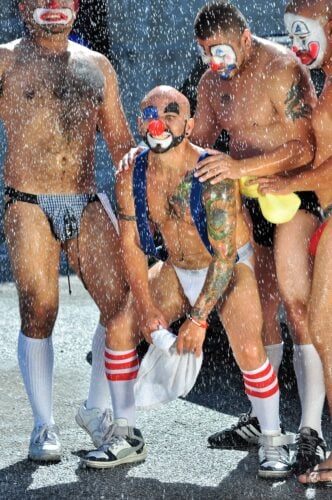
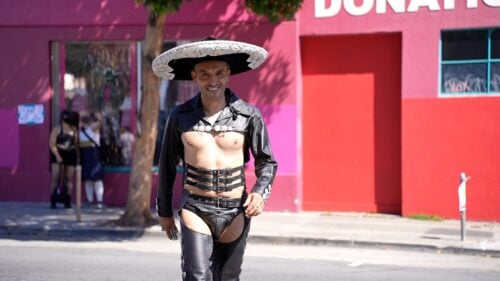
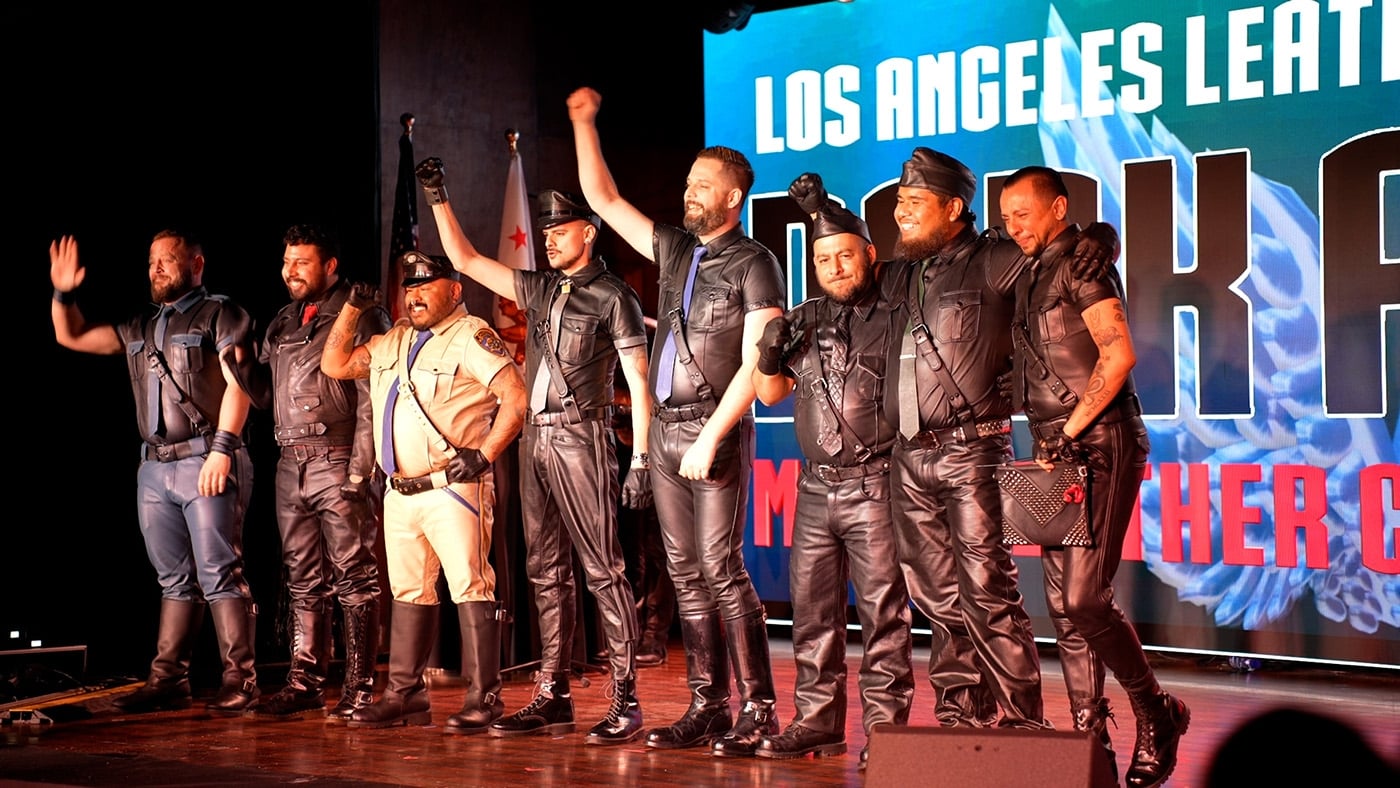
When one thinks of the “Leather community” what images or thoughts does that bring up. Curiosity, intrigue? Perhaps an image of a Tom of Finland model emerges, or maybe the leather exhibitions at a local pride parade. You may be surprised to learn that leather is becoming a scene more now among Latinos and comprises a growing subpopulation within the larger Leather community. To this end, Latino presence and influence in the scene is for sure changing the mindset and composition of the Leather community in general and what it looks like today vs. in years past.
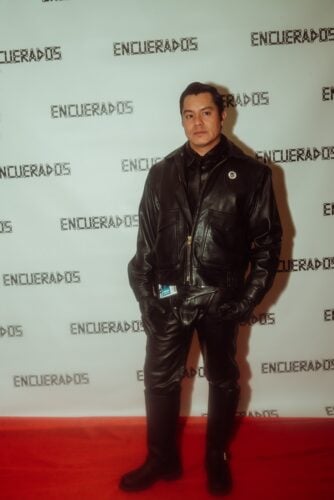
Encuerados is a documentary that addresses all of this and will be featured at the 32nd Annual Long Beach QFilm Festival 2025 which will take place Thursday, September 4 through Sunday, September 7. The film is the work of producer Orlando Bedolla and addresses the stereotypes and tells the inspiring true-life stories of nine Latino men who are building community, making safe places for those who have been unsafe, and giving space to those who give to and celebrate life. Central to these stories is the role of Latinos in their struggles and quests to diversify the leather community and the LGBTQ+ movement within it.
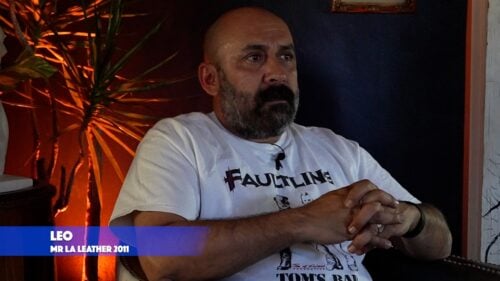
Encuerados means two things: to be naked and to be leather-clad. Encuerados chronicles a year-long involvement with the Latino men in leather with a primary focus on the historical attainment of the first Latino man Leo Iriarte winning the title in 2011 of Mr. Los Angeles Leather. By showcasing the legacy of Leo, Encuerados takes a deep dive into the leadership of the men empowered to create representation in the leather community including the various competitions.
Since its inception, stories about the LGBTQ+ leather scene have been dominated by documentaries that detail the intimate practices of the White LGBTQ+ community and rarely do these narratives focus on the contributions Latinos (and other people of color) have played towards advancing the leather community. But recently the growth of Latinos involved in the leather scene calls for paying tribute to the contributions and historical involvement of LGBTQ+ Latinos.
Being a leather man in the Latino community seems difficult for sure, from the outside looking in. Internalized homophobia, transphobia, other cultural issues, such as machismo and strong religious influences, perceptions of the practices such as the kinks and fetishes work against its’ embrace.
In the film, Leo Iriarte talks about when he won the title of Mr. LA Leather and says he pissed a lot of people off because he did not ‘fit’ the mold of the type of person that should hold the title. Leo, who is of Mexican decent says in the minds of many in the community the title was intended to be for a Caucasian guy. Therefore, capturing this title caused a clash of ideals in the Leather community and Leo says the producers of the event would eventually seek to remove his title based on him not having an official California ID. In the documentary Leo goes on to say that his life was put in danger, that he was blackmailed by fake on-line profiles and he received several nasty messages. For Leo, winning the title became the worst nightmare of his life.
Reflecting back, Leo says he does not think the leather community is itself racist, but rather some people within the leather community are. His experience as difficult as it was, became a catalyst for change and increased representation and involvement of many more Latino men. Perhaps a symbol to this struggle is a big Mexican emblem tattoo on Leo’s chest creating a proud contrast with the harnesses and leather straps that has given other Latinos the confidence to go out and compete for titles within the Leather community themselves.
Orlando Bedolla is a Los Angeles-based filmmaker and LGBTQ+ activist working to illustrate the diversity of the LGBTQ+ experience. Orlando says he has always been interested in the leather community and quickly learned that the stories of the struggles for representation experienced by Latinos in the scene had to be told.
Adelante: Prior to making the film, were you a part of the Leather community?
Orlando: Not really. I’ve always been interested in Leather culture. In my early 20s, a friend took me to Eagle LA for the first time. When I was there, a couple guys came up to me and commented that I did not look like I belonged there, rather I looked like a West Hollywood kind of guy. After that night I didn’t go back. Then many years later in about 2021 the same friend invited me to a leather party, and it was part of this leather convention called Claw. When I walked in, there were all these Latino men wearing harnesses and leather jock straps and I had a great time. Soon after that, the idea of making a film about this came to my thinking because I didn’t know there were that many Latinos that were into this.
Adelante: So that surprised by?
Orlando: Yes. It would have been good for me to know all of this when I was younger and wanted to join but didn’t know anyone. I started to do a little research into who threw this party and on how large the Latino community (within the Leather scene) is when it comes to kink and fetish. I found out the main organizer was Leo Iriarte, who I found out was the first Latino to win the title of Mr. Leather LA. I reached out to him and told him and shared my idea to make a film to bring awareness of Latinos in the Leather scene. His immediate response was it was a great idea and that he’d help me and do anything for the Latino community’s visibility in leather.
Leo invited me to one of his party and I was able to film (in certain areas) and I started to learn more about him, when he won and all the things that happened because of that including that the larger community wanted to take his title away. I was so interested in how hard he worked to keep his title and to ensure that other Latinos also sought to get titles in the Leather community, so there would be more representation. Then I learned that Leo had also started the PAYASOS LA group and that more Latinos were running for leather titles in the Los Angeles community. He thought it would be good for me to follow the stories of those other Latinos running in 2022 for Mr. LA Leather given that five were also Latinos. Angel Rincon won that year and he was also one of the PAYASOS. Then I approached Angel, Francisco and Christian who were all mentored by Leo and I started telling and filming their stories and meeting the other guys.
Adelante: What brought you to make the film?
Orlando: It was an eye-opening experience when I went to Leo’s party. I had always had an interest in this, but I didn’t get into it because of the experience I had where I was rejected. When I saw all the Latinos involved, it motivated me. The Leather community was always perceived to be this white/Caucasian sis-gender male community. Minorities in leather with visibility in the community was not really a thing. In past years, it is known that Blacks, Latinos and women were not really included. I felt that story needed to be told.
Adelante: What did you learn about the Leather community or the Latino community doing leather by making this film?
Orlando: The leather community always had a community element to it. They are united and they help each other. They collect money and donations to help those in need; in fact, it is expected for those which hold titles. There is a lot of philanthropy in the leather community. They also try to get to know each other, to be social and to create a community.
Adelante: What are you seeking to accomplish with releasing the film?
Orlando: One of the goals is to educate people about the community, kinks and fetishes. People may be hesitant or afraid of it because they may not know about the practices of the community like ensuring safety in what they do, good communication, consents to participate, safe words, etc. Education was a primary goal. Also, the representation of Latinos in the scene is a story important to tell because a lot of Latinos are doing a lot of good work.
Adelante: Within the Latino LGBT community is leather being accepted?
Orlando: In Los Angeles the leather community is large and flourishing. Internationally, it is also growing in Mexico and South America. LA and Mexico City have large leather scenes as do several other cities with large Latino LGBTQ populations. It seems to be more accepted and growing and this film will get it out there even more.
It is said the leather scene was started by gay men dressing up, like in biker gear taken from the heterosexual community to portray being “manly.” From a time-frame perspective, it is believed to have started during World War II when gay men in the armed forces were stationed in cities like San Francisco and Los Angeles and sported leather as a means of building an identity and community.
As the film will illustrate, leather is identified with kink, SM, bondage and fetishes. It is also identified with community, community service and charity. The nine Latino encuerados say they express sexuality in a leather way but also with Latino sensitivity which can be more festive. “Latinos do it a little different. We do it our way.”
The documentary spotlights some of the common themes which runs through the stories of the Latino leather men. Their interaction with religion is a common theme. Many of the Encuerados say they were bullied, for the way they walked or talked and called names such as sissy and experienced homophobic environments. Many said they did not feel masculine enough growing up and that might have contributed to their allure of the leather community.
In the film Leo shares his first experience in Leather. He was new to the United States and went to a leather bar and found it ‘shocking’ that everyone was enjoying themselves, openly, with leather outfits that were very sexy. Much different than in Mexico where the scene had to be more hidden.
Encuerado Jonny recalls his journey into the Leather scene was when he went into the Leather Shack in Du Pont Circle in Washington, DC. He saw the harnesses, jock straps, cock rings and poppers and says he was in ahh and loved everything he saw and “wanted to touch everything.” He says he came across a DVD on the leather community, watched it and saw men doing all kinds of things: the kissing, the sex, the taking control of one another, and more and all of it was in there. He says he was mesmerized and knew that was the type of sex he wanted to have.
Francisco remembers when he was in the Navy he stopped in at the Eagle in San Diego. He knew he had a kink that was off the ‘beat and path’ but he really could not define it. He says he went in, and the atmosphere was a lot different than other gay bars he had been to. There was no dance floor, just men who were feeling comfortable with their bodies, all body types, masculine, chubs and he thought it was sexy.
Yair talks about his first experience going to the Eagle LA. He felt he did not belong because he was coming from West Hollywood dressed preppie. He says everyone at the Eagle was wearing dark colors. He would begin to frequent the bar more and says the events were a little raunchy, kinky and raw and that he has loved it ever since.
Esteban remembers going to San Francisco Gay Pride one year and seeing the guys walking on the streets in leather chaps. He says the chaps were “super-hot” and wanted some to wear himself. Then and there he bought his first pair, put them on and walked in San Francisco, ass hanging out and feeling so proud.
The Encuerados documentary educates the viewer about the various kinks and fetishes. One learns that kink is taking something out of the ordinary and exaggerating it, such as showing off one’s nipples. However, for some in order to achieve an orgasm, they need their nipples played with. That makes nipple play a fetish. “Put simply, kink makes one look pretty and fetish gets you off.”
The documentary also describes “a scene” which is when two or more parties communicate about the kinks or the fetishes they want to engage in. There are boundaries, safe words, hand signals and communication skills. What is a ‘yes or no’. There are Dom and a Subs. Who takes control or gives up control. There is discussion of the risks, consents, safety, sane and consensual activities. The documentary covers all of it.
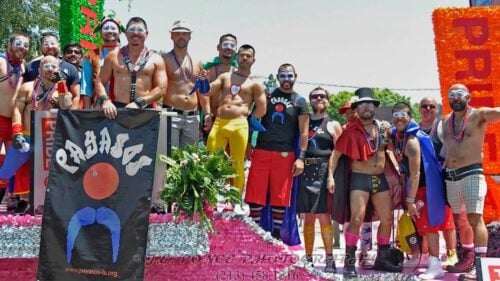
Leo Iriarte would go on to found The PAYASOS a group of friends in the Latino leather community doing good things for their community and the people around them. The goal of the group is to create community, have fun and enjoy themselves. The name PAYASOS, which means Clowns in English has brought a lot of visibility to Latinos in leather seeking to find their place in the leather community. The reception of the PAYASOS remains very positive and they continue to host parties and fundraisers for community causes dressed in clown make up.
Fast forward to today, things have changed and there are more Latinos representing in leather and holding titles. The nine Latino men featured in the film Encuerados are:
LEONARDO IRIARTE, Mr. LA Leather 2011 and founder of Payasos L.A.
ESTEBAN BARTHOLO, Mr. Bullet Leather 2015, and Mr. CMEN and co-founder of Payasos L.A.
ANGEL RINCON, Mr. LA Leather 2022
ALAN GABRIEL, Mr. LA Leather Bear 2020
ROMYN, Mr. SoCal Leather 2020
CHRISTIAN MEDINA, Mr. Faultline Leather 2020
JONNY LOPES, Go-go dancer and aspiring title holder
FRANCISCO PERALES, Mr. Los Angeles Cub 2016 and Mr. Sanctuary Leather 2019
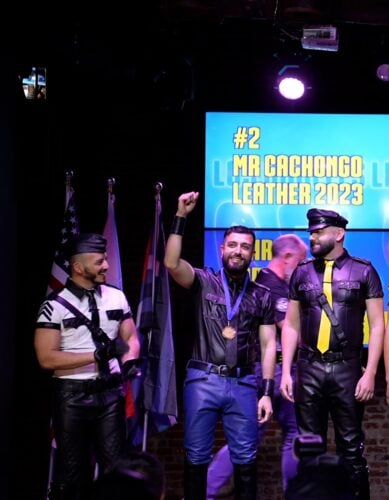
YAIR, Mr. Cachondo 2023 and founder of Contra Mundo.
Adelante: Does the Latino leather community mix with the other parts of the LGBTQ community?
Orlando: Today it’s normal to go to many places and see guys in harnesses and jock straps, so it’s becoming more mainstream.
Adelante: What kind of feedback are you getting from those who have seen the film?
Orlando: We did a work in progress screening a year ago for LA Leather Pride and we got censored because they thought the scenes were too explicit and not necessarily educational but rather pornographic. When that happened, a lot of other people in the community went against that position of the LA Leather Coalition. Other WIP screenings have been more positive. So, there is a mix of feedback, but most people are very excited about the film.
Adelante: What happens next?
Orlando: Hopefully more of these screenings can get into the community, into libraries, schools and colleges, to create the education that is needed. We would like it to be on screening platforms and that would bring wide-scale visibility.
Adelante encourages its readers to go out to the Long Beach Q Film Festival and watch Encuerados. The Film festival will be from Thursday, September 4 to Sunday, September 7, 2025 and at The Art Theatre, located at 2025 E. 4th Street, Long Beach, CA 90814. You can get tickets and find the exact date and time by going to their website at www.qfilmslongbeach.com
There will also be a Latinx short film program on Saturday, September 6 at 5 p.m.
You can read more about Encuerados at their website at www.encueradosfilm.com.