

By: Laura Moreno
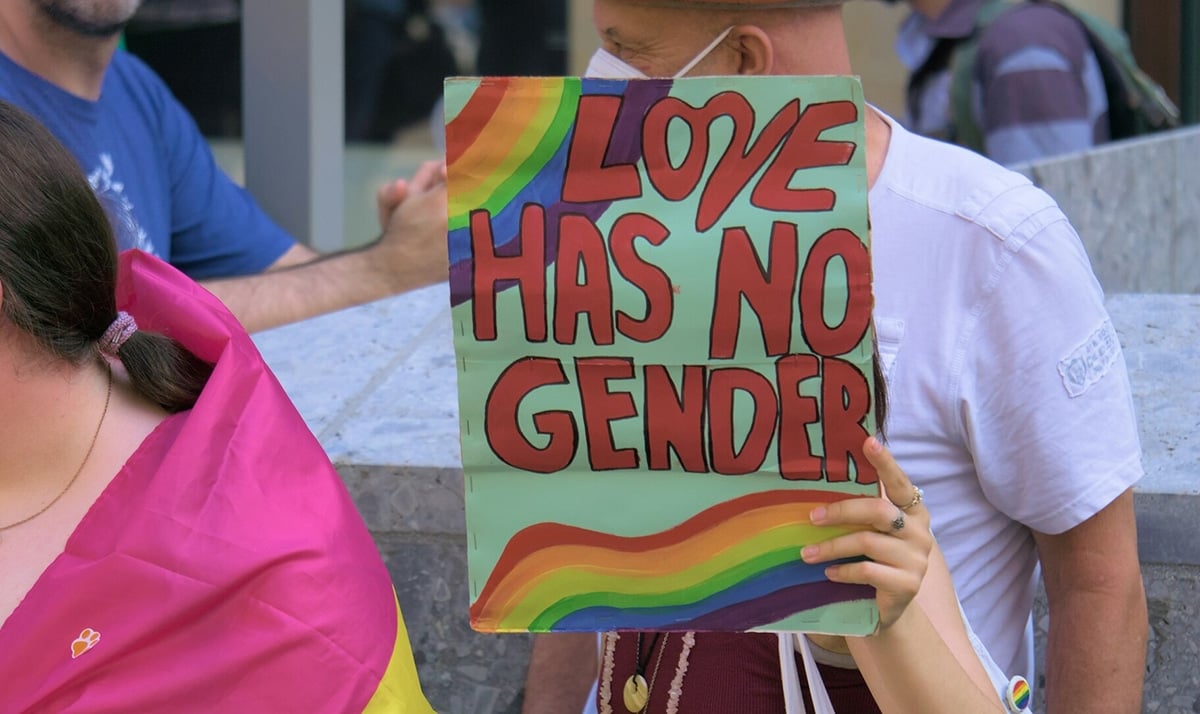
If you think redefining gender is a 21st century phenomenon, think again. On the contrary, society’s ideas of gender are for the most part artificial constructs that have changed over time. So why can they cause so much pain?
Perfume Wasn’t Always Feminine
Reportedly, some males develop gender dysphoria when they fell in love with sweet smelling perfumes and silently longed to be able to wear nice fragrances. One man who transitioned into becoming a woman described the crushing blow of realizing it was not socially acceptable for boys to wear such fragrances.
But actually floral perfumes were first worn by the male priesthood in Ancient Egypt! Perfumes were considered the nectar of the sun god Ra. For them, perfume was like holy water. Later, elite Egyptian men – and eventually women – began to wear perfume.
While we’re considering what was inherently masculine and feminine in ancient times, picture Egypt as it was recreated in the 1956 film The Ten Commandments. Recall the unapologetically sexy fashions worn by Charlton Heston and Yul Brenner. At the time, Egyptian men were breaking with all previous traditions. They shaved their beards, donned perukes (hair pieces to make their hair look fuller and more luxurious), and – yes – wore sweet smelling perfumes. It’s also worth noting that their flesh-baring fashions – including mini-skirts and bare shoulders – only seemed to enhance their masculinity.
So how did some of today’s men end up feeling suffocated by gender norms that are not always the norm?
Why Does Gender Hurt?
Gender dysphoria is defined as acute suffering around one’s gender. Some transgender people suffer gender dysphoria, but many do not. Ironically, some trans people don’t experience the dysphoria until after they have gender confirmation surgery, when some people feel the new body is no longer their own. Everyone’s experience is different.
We don’t know why some people suffer gender dysphoria, but its roots may be spiritual. However, Gestalt therapy using visualization exercises to healing “introjects” has proven helpful. An introject is an idea or attitude we unconsciously adopt from other people, institutions, and media, such as the historically inaccurate idea that perfume is feminine.
Everyone has introjects to the extent that we are all influenced by one another. However, only certain introjects become harmful. This is particularly true if we adopt the distorted views of negative people. Negativity builds on negativity. And when it does, an introject can take on a life of its own and result in gender dysphoria.
Ultimately, most people are a complex mix of what might be called masculine and feminine qualities. Doesn’t every man (cis or trans, gay or straight) have a potential for great feeling, appreciation of beauty, possibly even an inner diva? Doesn’t every woman harbor a toughness that enables her to get things done and exhibit great determination and courage? The yin and the yang are intertwined. Each contains a mutual recognition of the other. Being capable of the full gamut of possibilities is what makes us complete humans.
My guess is that one day in the not-so-distant future – when gender is viewed less stereotypically, gender dysphoria may become a thing of the past.
Greater Honesty and Freedom
“Million Dollar Man” and “Million Dollar Woman” used to be monickers for transgender people because that’s about what it cost to get gender affirming surgery.
By almost any account, being transgender can still be the most labor intensive and expensive of the LGBTQ identities. It can also be the most disruptive to existing social relationships. Even when people are supportive, the shift is often nearly as difficult for family, friends, and co-workers as it is for the person transitioning.
I know that when one of my female friends changed her first name to a different (but related) female name, it always felt unnatural to try to remember to call her by a different name. I realized right then how much harder it must when a family member transitions to the opposite gender.
All things considered, being able to talk about trans issues helps us see our world more clearly. Nonetheless, many people remain baffled at the strength of the trans movement. Trans people represent just 0.3% of the population. On the other hand, that’s 1.4 million Americans. In contrast, we have heard much less in the media about the huge percentage (about 40%) of LGBTQ people who are pansexual/bisexual.
Yet in the end, trans acceptance will be a hard-won victory that leads to greater honesty and freedom for all people. In addition to understanding our trans siblings, the process will lead to a better understanding that gender “norms” were never set in stone in the first place. And that could save many people a lot of heartache.
Visit the Transgender Wellness Center on Wilshire Blvd. in Los Angeles for more resources.