

By: Al Ballesteros


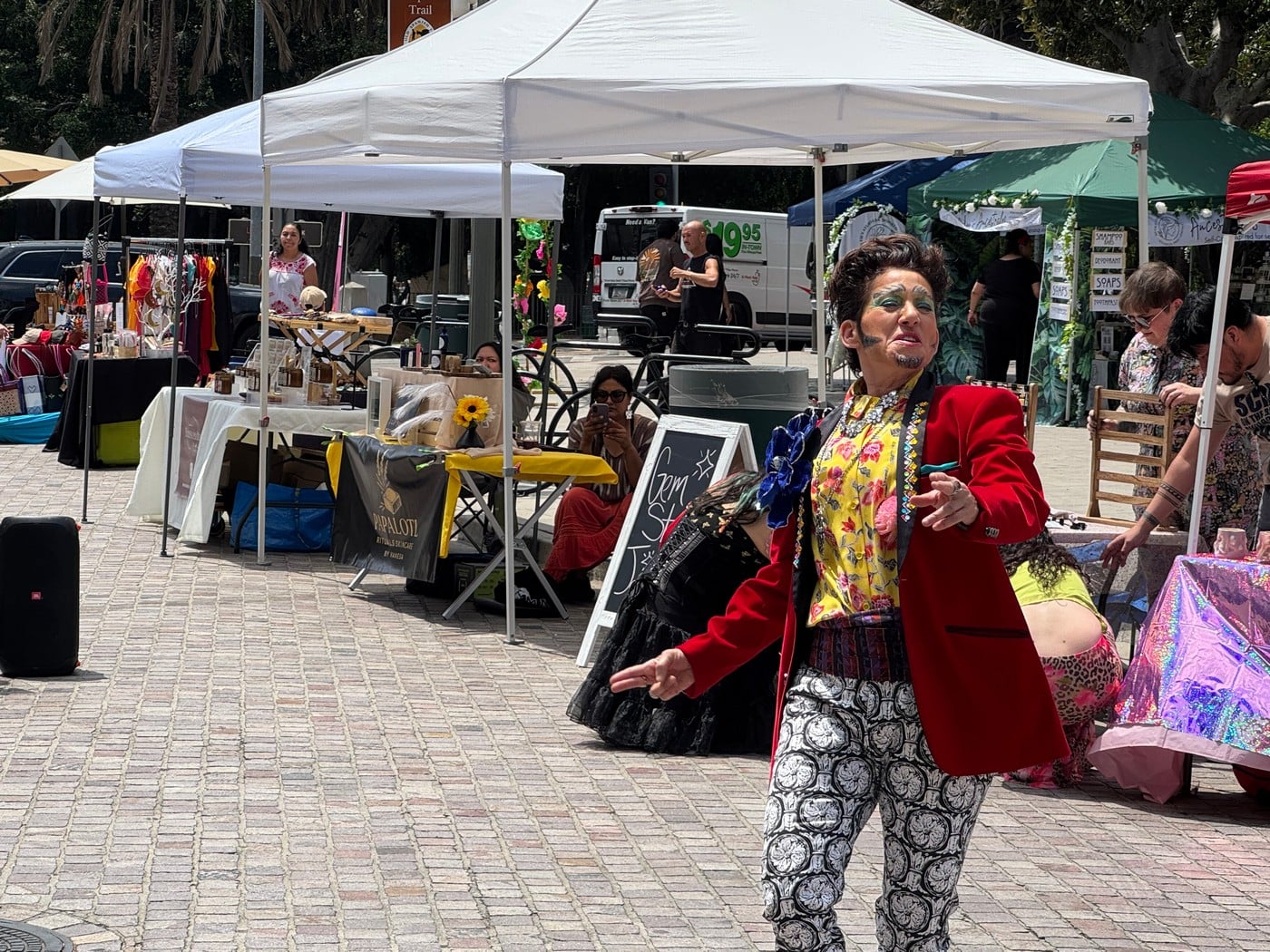
The next Queer Mercado will happen, once again, at the historic La Placita Olvera on June 20, 2026 beginning at 10:00 am to 4 pm. You can expect a whole host of Queer Mercado vendors set up in the plaza along with music, performances and fashion. The Mercado provides an opportunity to bring LGBTQ+ artists and crafts people, community, culture and identity together with the rich and proud cultural heritage of the city of Los Angeles.
La Placita Olvera or Olvera Street is where Los Angeles started. The year was 1781 when 44 settlers made their journey from Sonora, Sinaloa and Jalisco and settled on and around this historic street. These settlers were called the original Los Angeles Pobladores.
This location is a cultural center and tourist attraction. Many of the original structures from that early time still stand including the Adobe Avila, the oldest house still standing in Los Angeles which was built in 1818 along with the oldest church Our Lady Queen of Angeles, dating back to 1784 with the new structure completed in 1822. Traditional and legacy vendors line the one block historic cobblestone street selling items you can only get there or in Mexico. This wonderful historic area of our city is now complimented with the richness brought by LGBTQ vendors of the Queer Mercado.
You may ask: Can the Queer Mercado co-exist and fit in at La Placita Olvera?
Absolutely. Many would even say it would be a tremendous opportunity to bring a new infusion of energy and excitement to the historic street. It could be a game-changing concept, which incorporates LGBTQ+ people into a place where their own cultural roots trace back to that same history nearly 250 years ago.
Within the larger LGBTQ community and its promotions to locations on the West Side, one rarely sees anything mentioned with respect to history of Los Angeles and all that exists from a time long ago. La Placita Olvera is not promoted as an attraction to the larger gay community visiting the city as a place one must see. This is a lost opportunity because Los Angeles is a destination point for hundreds of thousands of LGBTQ people from all over the United States and around the world each year.
When LGBTQ people visit Los Angeles, they are largely encouraged to visit Hollywood and West Hollywood, Studio City, Melrose Avenue and other “gay-friendly” tourist attractions. This may be changing as DTLA or Downtown Los Angeles has, in recent years, opened several LGBTQ venues, which are very popular. To be sure, go check out Precinct a gay club in DTLA busy most days of the week and packed on the weekends, located at 357 S. Broadway.
La Placita and the history of Los Angeles is well positioned to be promoted to the larger LGBTQ community and tourists. Our community gravitates to culture, history, and the arts. So, why not promote La Placita Olvera to the LGBTQ community visiting one of the most cosmopolitan cities in the world?
The Queer Mercado offers this opportunity. Diana Diaz, founder and director of the Queer Mercado feels strongly that LGBTQ people are just as eager to learn and experience the history and culture of Los Angeles as anyone else. Perhaps the Queer Mercado will now give the larger gay community a reason to come to the birthplace of the city.
Diana says the Queer Mercado is looking for a permanent home, at least once a month. She hopes that home will be at La Placita. She also believes that the community supporting the Queer Mercado will also support the legacy vendors, the restaurants and landmarks.
Adelante: Why La Placita?
Diana: I love the Queer Mercado and I also love seeing all the tourism at La Placita and being around the rich history of the city. I see the coming together of both these as an opportunity for the queer community to be visible in a place that is historical. I’m hoping the LGBTQ+ community will find pride in being here.
Adelante: What has the reception been like?
Diana: I’ve been surveying the vendors and I believe their impressions are positive, largely. They were happy that the Queer community came out to support the efforts.
Adelante: What were the impressions of the Queer Community being in this new space at La Placita?
Diana: Many felt visible and supported. They ate at the restaurants, enjoyed the ambiance, were busy selling their items and doing their crafts and it was beautiful.
Diana says culture is becoming more popular and it’s a sign of the times to embrace one’s culture. “I don’t think the vendors there at La Placita realize that this cultural movement is so big outside in the larger community.”
Adelante: What kind of reception is the Mercado getting at La Placita?
Diana: I’m getting a lot of positive feedback with respect to what we are trying to do. We are also getting requests to advocate for change and support. To some extent, La Placita has perhaps been overlooked by the city in terms of investments for more support and city services, business development and innovation.
Adelante: You’re also a regular vendor here on days outside of the Queer Mercado?
Diana: Yes. And as a vendor, I’m learning more about La Placita. People stop by my booth and tell me stories. Maria told me about a tree that was planted by her late husband more than 80 years ago when he was eight years old. Maria is now well into her 80s and represents a history of families who have worked at the Placita for generations. Great, great, great grandchildren of the legacy vendors still work at La Placita Olvera.
Diana believes the city should invest more in the innovations the community has to offer. She feels the city should strengthen more what is offered at La Placita. “During the Queer Mercado, I met people from Poland, Italy, Canada, Germany and other parts of the United States and California. They told me they loved the idea of the queer community also being included and part of the larger display of culture at La Placita.”
There was a lot of foot traffic of folks coming out to support the Queer Mercado. Diana says the Queer Mercado is just getting started at La Placita, and some businesses are already benefiting from the increased foot traffic. She believes it’s a matter of time before all vendors and businesses see increases in specific sales. It is well documented that LGBTQ communities have strong purchasing power and this is good for La Placita.
“Queer Mercado vendors sell original items, much different than what is sold in the traditional plaza area, and if we work together, I believe we will increase exposure for all of it – our vendors and the La Placita original vendors.”
Adelante: The LGBTQ community is creative and has talented artists and Crafts persons. How do you find your vendors?
Diana: Word of mouth. I network with local queer organizations. I’m looking for original items, arts and crafts and that represent Los Angeles Culture. I think its great when visitors to Los Angeles can take a piece of Queer LA with them back home. Olvera Street attracts people from all over the world and its nice they will have something that reminds them of their trip to this destination.
La Placita Olvera is officially part of the El Pueblo de Los Angeles Historical Monument. It is a historic pedestrian marketplace in downtown Los Angeles widely celebrated as the “birthplace of Los Angeles.” Founded as a vibrant Mexican marketplace in 1930 through the efforts of activist Christine Sterling, this 0.1-mile cobblestone street preserves the rich history of old California and serves as a major hub for Mexican-American culture.
On the Plaza are also some very interesting and old attractions. LA Plaza de Cultura y Artes – is an acclaimed museum and cultural center located at 501 N. Main Street, right across from the plaza. It celebrates Mexican-American culture with regular events, exhibits, and public programming.
La Iglesia de Nuestra Señora la Reina de los Ángeles: The Church of Our Lady Queen of the Angels is an old historic Catholic church located on the Plaza. The Church’s origins date to 1784, when the Spanish founded the Nuestra Senora Reina de los Angeles Asistencia to support the nearby Mission San Gabriel. Around 1814, the original mission of the site was abandoned and the new church was founded in its place by Padre Luis Gil y Taboada. This structure is one of the oldest buildings still standing in Los Angeles. The church was one of the first three sites designated as Historic Cultural Monuments by the City of Los Angeles, and has also been designated as a California Historical Landmark.
The Oldest Surviving House in the City is also on La Placita Olvera, the Avila Adobe. It was built in 1818 and sits at 10 Olvera St, Los Angeles, CA 90012. It was built by Francisco José Avila, a wealthy cattle rancher and former mayor of LA. It features 3-foot-thick adobe walls and briefly served as the US military headquarters during the Mexican-American War. Today, it is open for free public tours. Please check the schedule.
The area also houses the 1887 Italianate Pico House, the Merced Theater, and the historic Firehouse No. 1
Other attractions include:
The Puestos: The street is lined with dozens of vibrant wooden stalls offering imported Mexican folk art, leather goods, pottery, embroidered clothing, and Day of the Dead memorabilia.
Cielito Lindo: A legendary, decades-old food stand famous for its taquitos smothered in rich avocado salsa.
La Noche Buena & Casa de Sousa: Excellent local spots to sit down for a full plate of enchiladas, tamales, and margaritas.
Churros & Sweets: Multiple street vendors and bakeries offer fresh churros, pan dulce, and champurrado
The Queer Mercado was started by Diana who sought to create a space that would help LGBTQ Latinas and Latinos find footing in their communities — someplace that could help them be more visible. This led her and a couple of friends to start the Queer Mercado, originally held in East L.A.
At the Queer Mercado you will find unique items, such as colorful handmade earrings, scented candles, buttons, plants, knick-knacks, paintings, clothing, pillows, scarves and much more. The Queer Mercado also disseminates important information, including about health and wellbeing.
For the folks who haven’t been there, many they say they have been meaning to go. For the people that go, they comment how much they love the Mercado. One of the things most say about the Mercado is there are great people and it feels eclectic and inclusive.
Overall, the vendors at the Queer Mercado say they feel a great sense of community. Many say it feels like family there, everyone knows one another and that the family keeps getting bigger. Others say the Queer Mercado feels like a protected safe space in a city that is not always as welcoming for Queer and Queer Latinos. The Queer Mercado is also culturally diverse. Everyone goes there, people that are API, Black, White and straight allies either to sell their products or to purchase items and enjoy the culture and performances.
Please get out to support the Queer Mercado on June 20 at La Placita Olvera. Entrance to the Mercado is free. To see photos, view our IG @AdelanteMag.