

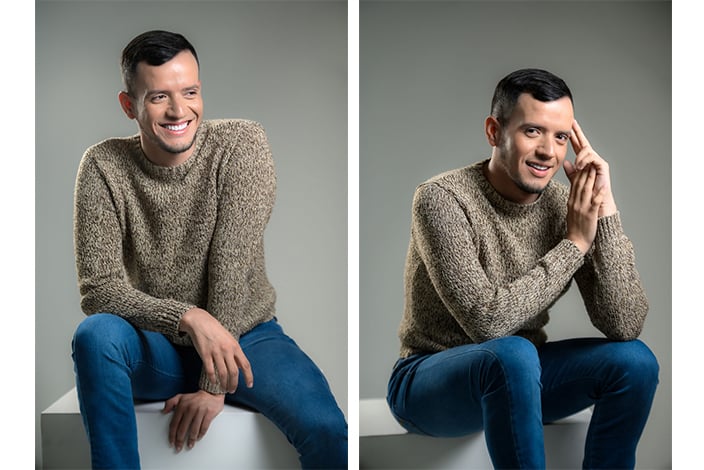
Article: Al Ballesteros/Pepe T. | Photos by: Photo by: Yoels Rodríguez | IG: @yoelsrodriguezfoto
Follow Adelante on our Facebook page to stay updated
Andry Hernández Romero was released from the El Salvadorean prison CECOT on July 18, 2025. He survived 125 days in a maximum-security prison, “the worst of the worst”, a horrendous experience and something to which he should have never been subjected.
When the community and world learned that Andry Hernandez had been deported from the United States to a maximum-security detention center in El Salvador constructed largely for terrorists, it felt very wrong on many different levels. As the facts emerged and photos of him were circulated, they told the story of an openly gay hair and make-up stylist holding brushes posing with models which he painted. We soon learned that Andry had traveled to the United States seeking asylum because of problems he had while working as a makeup artist at a Venezuelan government-affiliated TV network. Mainly, he suffered harassment for being openly gay and other reasons.
The more we heard, especially as members of the LGBTQ community and our allies, more disbelief set in. You see, Andry seemed to do everything right, he followed directions for an asylum application in that he entered his information into the State Department’s on-line system and requested a date to present his case, exactly how he was supposed to. He showed up for an interview with officials on August 29, 2024 at the San Ysidro border crossing with Mexico and was placed in a migration center waiting for further follow-up. But that follow-up never came and after being there for several months, and with no alleged criminal record, on March 15 he was deported to a jail in a country he had never known.
Andry was actually accused of being a gang member because of tattoos he has on his arms. But according to him, the tattoos symbolized the Three Kings or Reyes Magos in Christian teachings and also display the names of his mother and father. But none the less, he was grouped together with hundreds of other Venezuelan migrants and sent to a mega-prison in El Salvador by the US government.
Many of us know what it looks and feels like to be overlooked, disregarded, targeted for who we are, treated cruelly, left unprotected, being disappeared and erased. This has been happening to members of the LGBTQ community for years and these ills have escalated quickly up since the change in administration in Washington, DC. This is what many of us believe happened to Andry; he applied in a legal way for asylum and was caught up in politics between the Biden Administration and what would come next, and all the anti-immigrant rhetoric that caused him to be swept up along with countless others and disappeared out of the country.
But the LGBTQ community and its supporters could see right through the bullshit. Because of this injustice, the LGBTQ community in Los Angeles, California and across the world came together and organized to bring visibility and funds to Andry’s case. There were marches, rallies, letter writing campaigns and phone calls demanding his release. His name and his face became a rallying call pointing out the injustice bestowed on him and others in his same situation. Andry, and all the others imprisoned with him were release through another political process directly between the governments of Venezuela and El Salvador. However, the power of the community raised the visibility of his case and for sure brought pressure to the highest levels that something needed to be done.
Jorge, Pepe, and Al of Adelante Magazine spoke with Andry via zoom about his experience. We also talked with Andry about where his life is today and whether it is possible to get back on track given what he has gone through.
Jorge: Before we start and bombard you with lots of questions, I want you to know that we are very proud of you. You are a hero for the Latinx LGBTQ community and you have many supporters and people behind you. I realize that you were in a place that you didn’t have access to what was happening here on the outside, but from Los Angeles to San Francisco, Miami, New York and Chicago I know that many people joined the cause to achieve this moment in time where you are free.
Andry: Truly, thank you so much for all the support and the huge movement that you all made across the United States, especially there in Los Angeles. My lawyers are from Los Angeles. I love those women, I love them very much because they have moved heaven and earth, and as I told them, I would like, at the appropriate time, to get in touch with the community there in the United States through a video or an interview like this on Zoom…and in my own words, thank them because they truly played a very important part in my liberation.
Jorge: When we decided to organize for you and when I called them saying we had so many ideas, they are lawyers and understand the law and we are activists and represent the community, so together we were able to do many things.
Pepe/Al: Hi Andry, first, we wanted to thank you for this interview. Many of us feel we know you because we’ve been following your story in the media since your detention and transfer to CECOT (Centro de Confinamiento del Terrorismo) in El Salvador. But could you tell us, in your own words, who Andry Hernández is?
Andry: Well, the Andry that left CECOT is totally different from the Andry that entered the American immigration system. Right now it is an Andry that is more focused on ensuring the rights for the community. It is an Andry more focused on creating my foundation called ‘Angel De Dios’ (Angel of God) and right now I am also focusing on creating a multi-platform to help people who have been through a natural disaster, are dealing with a chronic illness. I’m a more humanitarian Andry; an Andry that is more aware of difficult situations in life that some people are going through.
Pepe/Al: You decided to come to the United States out of fear of persecution in your country, but what you received was this nightmare in two detention centers. Can you talk about what you expected, as a gay man seeking refuge here in the United States, compared to what actually happened?
Andry: Look, what did I expect? I expected a country of freedom, I expected a country with gender equality, I expected a country with the right to freedom of expression. I’m not going to generalize in the sense that everyone is bad or everyone is good because in every country there are bad people and good people. Unfortunately, I had to go through a political circumstance that affected me. But perhaps it was God’s will that it happened that way so that everyone could learn about the huge problem that currently exists there in the country. And our community made it known that we are all united worldwide and that if something happens to one of us, we always come out to support and defend them. That is what I am seeing right now.
Pepe/Al: It is sad that what happened to you is kind of a message the U.S. Government is sending to LGBTQ people facing persecution around the world. Do you think other LGBTQ people facing persecution in their countries would now think twice before trying to come to the United States?
Andry: It’s not just people from the community who are thinking about entering the United States. Right now, anyone who thinks about stepping on American soil thinks about being able to enter. I mean, if I can be honest, Venezuelans can’t even enter the country with a visa. So right now, what we have to do is be aware that we must address the problem that’s happening with all these arbitrary detentions, these unjust detentions, and that the United States Supreme Court must take action on the matter.
Pepe/Al: When you were arrested and the public learned the details of your situation, there was widespread outrage and public outcry seeking your release. This was spearheaded by the LGBTQ community, who always spoke the loudest and eventually picked up by liberal and mainstream media. What do you want to say to them all about this?
Andry: I am speechless for all the signatures, the protests, the marches, the conferences. I really don’t have the words to thank you. You have done a super beautiful and super gigantic job. I met Jorge recently in the video that my family showed me in which he spoke, my lawyer spoke and other people spoke. Well, in due time I would like to talk to them and get to know them even if it’s via electronic means. I am super moved by all this and all that is happening.
Perhaps one of the greatest forms of torture is isolating those detained from their loved ones, with no visits, no contact and no communication. For 125 days, Andry was isolated from the outside world. Although we were making lots of noise out here, we did not know how he was doing inside the prison and whether or not he was ok. We had no sense if he was aware of these efforts to support him and his release.
Pepe/Al: Did you know all this was happening? That you had all this support from our community?
Andry: No, I only found out when I got home. Reyna began showing me little by little. Reyna’s mom also showed me, my mom too.
Pepe/Al: Did you know that Congressmen Robert Garcia and Richie Torres (both gay men) advocated for your release?
Andry: I already had a real conversation with Robert. He’s a wonderful person, someone who gave me his full support. I have great respect and affection for him. I don’t know Richie, but I’m just finding out today about his assistance, but if I ever run into him, I would like to thank him.
Pepe/Al: During your detention in El Salvador, were you allowed to have contact at least with your lawyers abroad?
Andry: No, we didn’t have contact with any type of people, unless it was the officers who guarded us. Nor did we go out to a yard or a patio; we were always inside the cell 24-hours a day.
Pepe/Al: Did you have time to exercise?
Andry: Yes, we exercised inside the cell. I don’t know if you’ve seen what the cell’s layout was like, but they have two hallways. One hallway was used for playing on the floor and the other was used for exercise.
Pepe/Al: How did you keep your spirits up during this time?
Andry: Our spirits were like a roller coaster, sometimes we were down, sometimes we were up. It’s like a Panorama box, every day we woke up to a new surprise. In my case I thought about my family, I thought about the people I share my life with. In the case of my colleagues, they thought about their wives, their mothers and their children. So, the only thing that lifted our spirits was the camaraderie and brotherhood that we ourselves had. When a colleague felt bad, we offered them support, we gave them words of solidarity to help them not fall into some kind of depression.
Pepe/Al: In your mind, did you think you were going to be able to get out? Or what was going through your mind?
Andry: At first, believe me, no. At first, I was super scared. I’ve never been in jail. The only time I’ve ever been in a jail was in my town when I taught a police candidate how to model. They hired me to do her makeup and prepare her for the king’s reign. And there we rehearsed modeling inside the police cells. I’ve never been in prison, I have no criminal record, I’m totally clean. That didn’t help me at all, they didn’t care if I was clean or not.
Pepe/Al: Were you afraid for your safety, especially because you are gay?
Andry: In El Salvador I was very afraid, I had fear because I was surrounded by criminals, I was surrounded by real gang members, they had me dressed in orange and several people were in red, people who had already been in federal prisons. So, in one way or another I tried to mix with the Venezuelans who became my friends, they protected me a lot since I was the only gay person in that center. When I arrived in El Salvador, those Salvadoran officials taunted me, they said things to me. I realized that I didn’t have any protection, or any rights. So, I realized the best thing to do was behave as they wanted me to behave.
Pepe/Al: Basically, you were alone.
Andry: No, look, there were a lot of people from the community there. I think there were like three of us. But the one who stood out and said, “I’m gay, look, I’m homosexual, I belong to the community, or as they called it, diversity,” was me. I didn’t want to hide anything, but if you ask me who my other companions were, I can’t tell you. All of us were divided into 32 cells. I didn’t have much communication with the others in the other cells because they wouldn’t let us leave the cells.
Jorge: I heard that there were other members of the LGBT community but no one was mentioned other than Andry Hernandez the Gay makeup artist. Why do you think you were the only face of the LGBT community?
Andry: Look Jorge, I really can’t answer that question, but what comes to mind right now is what I just said. I mean, it was probably because I openly said from day one that I was gay and I identified as part of the community. I think that also made my image stand out to a certain audience. That’s really what comes to mind, but I can’t answer that question.
Pepe/Al: You said you suffered abuse, what kind of support are you receiving today to help you with that trauma?
Andry: Right now, I’m in treatment at a mental health clinic. Today I’m receiving psycholgical treatment to help me reintegrate into society. I haven’t wanted to touch on that subject trauma/abuse because I still don’t feel ready. The doctor told me that it’s going to be rough at the beginning, in the middle or at the end of the treatment to deal with the issue. There will come a day when I have to let it all out, I have to let go and I have to talk about that topic but at the moment I’m not ready. I don’t know if praying is a virtue or not. I don’t know but I’ve gotten in the habit of talking in my room. I only talk to my grandma, my grandma in heaven. I lie down and I close my eyes and I imagine that she’s next to me. I talk to her and that kind of helps me to let go of the burdens a little bit.
Pepe/Al: Considering everything you’ve been through, if you were given the opportunity to return to the United States, would you?
Andry: Without a doubt, yes.
Pepe/Al: Do your lawyers give you any hope that that will happen?
Andry: I haven’t been able to talk to them because I’ve been super busy. I have a meeting tomorrow with my lawyer Melissa and I’m going to ask her how my case is going, if there is there any news. I would really love to go back. I remember when I spoke to Congressmember Robert Garcia he told me that maybe in the near future it could be possible to return to the United States. The laws pertaining to this question are being challenged for change, a lot of it because of my case. If that reform goes through there may be a possibility that I could go back to the United States.
Pepe/Al: And if you were to return, which city would you want to live in?
Andry: My partner is from Pennsylvania, but he wants to move. He’s no longer comfortable being there. I thinking to myself, if we had a chance to be anywhere, I would like California, perhaps Los Angeles. Somewhere in that state because I still have many friends there. My lawyers are there, and a large part of the movement that fought for Andry is there.
Jorge: I remember from an interview you did before coming to the United States, you talked about a partner or a commitment, you wanted to get married. Is that the guy you’re talking about?
Andry: I am very reserved with my personal stuff. I like to keep my private life private and guarded. I don’t like to put the person I’m with in the eye of the hurricane, which I’m dealing with. I kept him away from everything for his safety.
I found out that several reporters managed to communicate with him, and I thought to myself what does this person have to do with Andry’s case. We are going to see each other on October 22 in Columbia. Reporters from Venezuela will be traveling to Colombia who are working on documenting my story, but now also included is the story of both of us; everything that I went through to reconnect with him, how this love story started. The reporters will record our reunion at the Bogotá airport, it will be beautiful. Now I don’t hide it anymore. I talk about him openly.
Jorge: I think we’ve bombarded you with so many questions. Maybe there will be another part two interview, or a part three interview?
Andry: Of course, I hope this is not the first or the last. It would be great to keep talking, and to tell you about my plans for the future, about the book I’m thinking of writing, about the documentary we’re thinking of making.
Pepe/Al: Is your life starting to return to normal?
Andry: Not 100%. Right now, I’m kind of reintegrating into society and it hasn’t been easy. People are making good and bad comments about me. There is both constructive and destructive criticism. I’m a person who believes that everyone is free to have an opinion and free to think how they want to think. That is their right. But at this time, I’m focused on returning to the world of makeup, to my profession, resuming my plans as a designer, and to be the Andry I was before all this happened.
Pepe/Al: All this attention that has been given to you, has it helped you in some way or another?
Andry: Yes, of course. I’m more at ease. I can sleep now. I’m eating better. The first days when I returned home, I couldn’t eat anything at all. Everything made me nauseous, everything made me feel sick. I slept only 2 or 3 hours a day, which was very little. But now my life is starting to get back on track.
It is great to see Andry out of that horrible situation, looking better and seemingly getting stronger. We hope to have several other interviews with him to follow his progress as well as the implications his case may have on others who find themselves in a similar situation.
One thing is for sure: rallying around one of our own who was unjustly treated has brought our community a little closer together. Hopefully our compassion, our coming together and calling out wrongs when they occur will be the glue that holds us together and allows us to collectively get through difficult times, now and into the future.
Con Moretones Pero No Roto
Anrdy Hernández Romero
Fue Liberado de su Detención en El Salvador y Habló en Exclusiva con Revista Adelante
Article: Al Ballesteros/Pepe T.
Photos by: Photo by: Yoels Rodríguez
IG: @yoelsrodriguezfoto
Andry Hernández Romero fue liberado de la cárcel salvadoreña CECOT el 18 de Julio de 2025. Sobrevivió 125 días en una prisión de máxima seguridad, “lo peor de lo peor”, una experiencia horrenda y algo a lo que nunca debió ser sometido.
Cuando la comunidad y el mundo se enteraron de que Andry Hernández había sido deportado de Estados Unidos a un centro de detención de máxima seguridad en El Salvador, construido principalmente para terroristas, se sintió muy mal en muchos sentidos. A medida que se supieron los hechos y circularon fotos suyas, se contó la historia de un estilista de cabello y maquillaje abiertamente gay que sostenía pinceles y posaba con modelos que él mismo pintaba. Pronto supimos que Andry había viajado a Estados Unidos en busca de asilo debido a los problemas que tuvo mientras trabajaba como maquillador en una cadena de televisión afiliada al gobierno venezolano. Principalmente, sufrió acoso por ser abiertamente gay y por otras razones.
Cuanto más escuchábamos, especialmente como miembros de la comunidad LGBTQ y nuestros aliados, más incredulidad nos invadía. Andry parecía haber hecho todo bien; siguió las instrucciones para una solicitud de asilo: ingresó su información en el sistema en línea del Departamento de Estado y solicitó una fecha para presentar su caso, exactamente como debía. Se presentó a una entrevista con funcionarios el 29 de Agosto de 2024 en el cruce fronterizo de San Ysidro con México y fue ingresado en un centro de migración a la espera de un seguimiento. Pero ese seguimiento nunca llegó y, tras permanecer allí varios meses, sin antecedentes penales, el 15 de marzo fue deportado a una cárcel en un país que nunca había conocido.
Andry fue acusado de ser pandillero por los tatuajes que tiene en los brazos. Pero, según él, los tatuajes simbolizaban a los Reyes Magos en las enseñanzas cristianas y también mostraban los nombres de su madre y su padre. Aun así, el gobierno estadounidense lo agrupaba con cientos de migrantes venezolanos y lo enviaba a una megaprisión en El Salvador.
Muchos sabemos lo que se siente ser ignorado,.perseguido por ser quienes somos, tratado con crueldad, desprotegido y ser desaparecido. Esto les ha estado sucediendo a los miembros de la comunidad LGBTQ durante años y estos males se han agravado rápidamente desde el cambio de administración en Washington, D.C. Esto es lo que muchos creemos que le ocurrió a Andry; solicitó asilo legalmente y se vio envuelto en la política entre la administración Biden y lo que vendría después, y toda la retórica antiinmigrante que lo llevó a ser arrastrado junto con innumerables personas más y desaparecido del país.
Pero la comunidad LGBTQ y sus defensores se dieron cuenta de las mentiras. Debido a esta injusticia, la comunidad LGBTQ de Los Ángeles, California y de todo el mundo se unió y organizó para dar visivilidad y recaudar fondos para el caso de Andry. Hubo marchas manifestaciones, campañas de redaccion cartas y llamadas telefónicas exigiendo su liberación. Su nombre y su rostro se convirtieron en un llamado a la acción que denunciaba la injusticia sufrida por él y otros en su misma situación. Andry y todos los demás encarcelados con él fueron liberados mediante otro proceso político, directamente entre los gobiernos de Venezuela y El Salvador. Sin embargo, el poder de la comunidad aumentó la visibilidad de su caso y seguramente presionó a los niveles más altos de que era necesario hacer algo.
Jorge, Pepe y Al de la revista Adelante hablaron con Andry por Zoom sobre su experiencia. También hablamos con él sobre su situación actual y si es posible retomar el rumbo después de lo que ha vivido..
Jorge: Antes de empezar y bombardearte con un montón de preguntas, quiero que sepas que estamos muy orgullosos de ti. Eres un heroe para la comunidad latina LGBTQ+ y tienes apoyo de muchas personas. Sé que estabas en un lugar donde no tenías acceso a lo que sucedía aquí afuera, pero desde Los Ángeles hasta San Francisco, Miami, Nueva York y Chicago, sé que mucha gente se unió a la causa para lograr este momento en el que eres libre.
Andry: De verdad, muchísimas gracias por todo el apoyo y el gran movimiento que han generado en Estados Unidos, especialmente en Los Ángeles. Mis abogados son de Los Ángeles. Quiero mucho a esas mujeres porque han revolucionado el mundo, y como les dije, me gustaría, en el momento oportuno, ponerme en contacto con la comunidad de Estados Unidos a través de un video o una entrevista como esta por Zoom… y, en mis propias palabras, agradecerles porque realmente jugaron un papel muy importante en mi liberación.
Jorge: Cuando decidimos organizarnos para ti y cuando los llamé para decirles que teníamos tantas ideas, ellas son abogadas y entienden la ley, y nosotros somos activistas y representamos a la comunidad, juntos pudimos hacer muchas cosas.
Pepe/Al: Hola Andry, primero, queríamos agradecerte por esta entrevista. Muchos de nosotros sentimos que te conocemos porque hemos estado siguiendo tu historia en los medios desde tu detención y traslado al CECOT (Centro de Confinamiento del Terrorismo) en El Salvador. Pero, ¿podrías decirnos, en tus propias palabras, quién es Andry Hernández?
Andry: Bueno, el Andry que salió del CECOT es totalmente diferente del Andry que entró al sistema migratorio estadounidense. Ahora mismo es un Andry más enfocado en garantizar los derechos de la comunidad. Soy un Andry más centrado en crear mi fundación, “Ángel de Dios”, y ahora mismo también me enfoco en crear una plataforma multidisciplinaria para ayudar a personas que han sufrido desastres naturales o padecen de enfermedades crónicas. Soy un Andry más humanitario; un Andry más consciente de las situaciones difíciles que atraviesan algunas personas.
Pepe/Al: Decidiste venir a Estados Unidos por miedo a la persecución en tu país, pero lo que recibiste fue esta pesadilla en dos centros de detención. ¿Puedes hablarnos de lo que esperabas, como hombre gay buscando refugio aquí en Estados Unidos, comparado con lo que realmente sucedió?
Andry: Mira, ¿qué esperaba? Esperaba un país de libertad, esperaba un país con igualdad de género, esperaba un país con derecho a la libertad de expresión. No voy a generalizar en el sentido de que todos son malos o todos son buenos, porque en todos los países hay gente mala y gente buena. Desafortunadamente, tuve que pasar por una circunstancia política que me afectó. Pero quizás fue la voluntad de Dios que sucediera así para que todos pudieran conocer el gran problema que existe actualmente en el país. Y nuestra comunidad dejó claro que estamos todos unidos en todo el mundo y que si algo le pasa a alguno de nosotros, siempre saldremos a apoyarlo y defenderlo. Eso es lo que estoy viendo ahora mismo.
Pepe/Al: Es triste que lo que te sucedió sea una especie de mensaje que el gobierno de Estados Unidos está enviando a las personas LGBTQ que enfrentan persecución en todo el mundo. ¿Crees que otras personas LGBTQ que enfrentan persecución en sus países lo pensarían dos veces antes de intentar venir a Estados Unidos?
Andry: No solo las personas de la comunidad están pensando en entrar a Estados Unidos. Ahora mismo, cualquiera que piense en pisar suelo estadounidense piensa si será capaz entrar. Para ser honesto, los venezolanos ni siquiera pueden entrar al país con visa. Así que ahora mismo, lo que tenemos que hacer es ser conscientes de que debemos abordar el problema que está ocurriendo con todas estas detenciones arbitrarias, estas detenciones injustas, y que la Corte Suprema de Estados Unidos debe tomar cartas en el asunto.
Pepe/Al: Cuando te arrestaron y el público conoció los detalles de tu situación, hubo una indignación generalizada y protesta pública que buscaba tu liberación.. Esto fue encabezado por la comunidad LGBTQ, que siempre fue la que más abogo y finalmente fue retomada por los medios liberales y tradicionales. ¿Qué quieres decirles sobre esto?
Andry: Me quedé sin palabras por todas las firmas, las protestas, las marchas, las conferencias. De verdad que no tengo palabras para agradecerles. Han hecho un trabajo maravilloso y enorme. Conocí a Jorge hace poco en el video que me mostró mi familia, donde él, mi abogado y otras personas hablaron. Bueno, a su debido tiempo me gustaría hablar con ellos y conocerlos, aunque sea por medios electrónicos. Estoy muy conmovido por todo esto y todo lo que está sucediendo.
Quizás una de las mayores formas de tortura es aislar a los detenidos de sus seres queridos, sin visitas, contacto ni comunicación. Durante 125 días, Andry estuvo aislado del mundo exterior. Aunque hacíamos todo por atraer atención aquí, no sabíamos cómo estaba dentro de la prisión ni si estaba bien. No teníamos ni idea de si estaba al tanto de estos esfuerzos para apoyarlo y su liberación.
Pepe/Al: ¿Sabías todo esto? ¿Que contabas con todo este apoyo de nuestra comunidad?
Andry: No, solo me enteré al llegar a casa. Reyna empezó a mostrármelo poco a poco. La mamá de Reyna y mi mamá también me lo mostraron.
Pepe/Al: ¿Sabías que los congresistas Robert García y Richie Torres (ambos hombres gay) abogaron por tu liberación?
Andry: Ya tuve una conversación con Robert. Es una persona maravillosa, alguien que me brindó todo su apoyo. Le tengo un gran respeto y cariño. No conozco a Richie, pero me enteré hoy de su ayuda, pero si alguna vez lo encuentro, me gustaría agradecerle personalmente.
Pepe/Al: Durante tu detención en El Salvador, ¿se te permitió tener contacto al menos con tus abogados en el extranjero?
Andry: No, no teníamos contacto con nadie, a menos que fueran los oficiales que nos custodiaban. Tampoco salíamos a un patio; siempre estábamos dentro de la celda las 24 horas del día.
Pepe/Al: ¿Tuviste tiempo para hacer ejercicio?
Andry: Sí, hacíamos ejercicio dentro de la celda. No sé si has visto cómo era la distribución de la celda, pero tenía dos pasillos. Uno se usaba para jugar en el suelo y el otro para hacer ejercicio.
Pepe/Al: ¿Cómo mantuviste el ánimo en alto durante este tiempo?
Andry: Nuestro ánimo era como una montaña rusa, a veces estábamos abajo, a veces estábamos arriba. Es como una caja de Panorama, cada día nos despertábamos con una nueva sorpresa. En mi caso, pensaba en mi familia, en las personas con las que comparto mi vida. En el caso de mis compañeros, pensaban en sus esposas, sus madres y sus hijos. Así que, lo único que nos levantaba el ánimo era la camaradería y la hermandad que teníamos. Cuando un compañero se sentía mal, le ofrecíamos apoyo, le dábamos palabras de solidaridad para ayudarle a no caer en algún tipo de depresión.
Pepe/Al: ¿Pensabas que ibas a poder salir? ¿O qué pasaba por tu mente?
Andry: Al principio, créeme, no. Al principio, tenía mucho miedo. Nunca he estado en la cárcel. La única vez que he estado en una cárcel fue en mi pueblo, cuando le enseñé a modelar a una candidata de la policía. Me contrataron para maquillarla y prepararla para el reinado. Y allí ensayamos modelando dentro de las celdas de la policía. Nunca he estado en prisión, no tengo antecedentes penales, estoy completamente limpio. Eso no me ayudó en absoluto, les daba igual si estaba limpio o no.
Pepe/Al: ¿Temías por tu seguridad, sobre todo por ser gay?
Andry: En El Salvador tenía mucho miedo porque estaba rodeado de criminales, estaba rodeado de verdaderos pandilleros. Me tenían vestido de naranja y varias personas de rojo, personas que ya habían estado en prisiones federales. Así que, de una forma u otra, intenté relacionarme con los venezolanos que se convirtieron en mis amigos; me protegieron mucho, ya que era el único gay en ese centro. Cuando llegué a El Salvador, esos funcionarios salvadoreños se burlaron de mí, me dijeron cosas. Me di cuenta de que no tenía ninguna protección ni ningún derecho. Así que comprendí que lo mejor era comportarme como ellos querían que me comportara.
Pepe/Al: Básicamente, estabas solo.
Andry: No, mira, había mucha gente de la comunidad. Creo que éramos como tres. Pero el que se destacó y dijo: “Soy gay, mira, soy homosexual, pertenezco a la comunidad, o como ellos decían, a la diversidad”, fui yo. No quería ocultar nada, pero si me preguntas quiénes eran mis otros compañeros, no te lo puedo decir. Estábamos todos divididos en 32 celdas. No tuve mucha comunicación con los demás en las otras celdas porque no nos dejaban salir.
Jorge: Escuché que había otros miembros de la comunidad LGBT, pero no mencionaron a nadie más que a Andry Hernández, el maquillador gay. ¿Por qué crees que eras la única cara de la comunidad LGBT?
Andry: Mira, Jorge, la verdad es que no puedo responder a esa pregunta, pero lo que me viene a la mente ahora mismo es lo que acabo de decir. Bueno, probablemente fue porque dije abiertamente desde el primer día que era gay y me identificaba con la comunidad. Creo que eso también hizo que mi imagen destacara ante cierto público. Eso es lo que me viene a la mente, pero no puedo responder a esa pregunta.
Pepe/Al: Dijiste que sufriste abuso, ¿qué tipo de apoyo estás recibiendo hoy para ayudarte con ese trauma?
Andry: Ahora mismo estoy en tratamiento en una clínica de salud mental. Hoy recibo tratamiento psicológico para ayudarme a reintegrarme a la sociedad. No he querido tocar el tema del trauma/abuso porque todavía no me siento preparado. El médico me dijo que va a ser difícil al principio, a la mitad o al final del tratamiento lidiar con el problema. Llegará el día en que tenga que soltarlo todo, tener que soltarlo y tener que hablar de ese tema, pero ahora mismo no estoy preparado. No sé si rezar es una virtud o no. No lo sé, pero me he acostumbrado a hablar en mi habitación. Solo hablo con mi abuela, mi abuela que esta en el cielo. Me acuesto, cierro los ojos e imagino que está a mi lado. Hablo con ella y eso me ayuda a soltar un poco el agobio.
Pepe/Al: Considerando todo lo que has pasado, si tuvieras la oportunidad de regresar a Estados Unidos, ¿lo harías?
Andry: Con los ojos cerrados, si.
Pepe/Al: ¿Tus abogados te dan alguna esperanza de que eso suceda?
Andry: No he podido hablar con ellos porque he estado muy ocupado. Mañana tengo una reunión con mi abogada Melissa y le voy a preguntar cómo va mi caso, si hay alguna novedad. Me encantaría volver. Recuerdo que cuando hablé con el congresista Robert García, me dijo que quizás pronto podría regresar a Estados Unidos. Se están cuestionando las leyes relacionadas con este tema, en gran parte debido a mi caso. Si esa reforma se aprueba, podría haber una posibilidad de que pueda regresar a Estados Unidos.
Pepe/Al: Y si regresaras, ¿en qué ciudad te gustaría vivir?
Andry: Mi pareja es de Pensilvania, pero quiere mudarse. Ya no se siente cómodo estando allí. Pienso que, si tuviéramos la oportunidad de ir a algún lugar, me gustaría California, quizás Los Ángeles. Algún lugar de ese estado, porque todavía tengo muchos amigos allí. Mis abogados están allí y gran parte del movimiento que luchó por Andry está allí.
Jorge: Recuerdo que en una entrevista que te hicieron antes de venir a Estados Unidos, hablaste de tu pareja o de un compromiso, de que querías casarte. ¿Te refieres a ese chico?
Andry: Soy muy reservado con mis asuntos personales. Me gusta mantener mi vida privada en secreto. No me gusta poner a la persona con la que estoy en el ojo del huracán, con lo que estoy lidiando. Lo mantuve alejado de todo por su seguridad.
Descubrí que varios periodistas lograron comunicarse con él, y pensé: “¿Qué tiene que ver esta persona con el caso de Andry?”. Nos veremos el 22 de octubre en Colombia. Periodistas venezolanos viajarán a Colombia para documentar mi historia, pero ahora también está incluida la historia de ambos: todo lo que pasé para reconectarme con él, cómo comenzó esta historia de amor. Los periodistas grabarán nuestro reencuentro en el aeropuerto de Bogotá; será hermoso. Ahora ya no lo oculto. Hablo de él abiertamente.
Jorge: Creo que te hemos bombardeado con muchísimas preguntas. ¿Quizás habrá otra entrevista de la segunda o tercera parte?
Andry: Claro, espero que esta no sea la primera ni la última. Sería genial seguir hablando y contarte sobre mis planes para el futuro, sobre el libro que pienso escribir, sobre el documental que pensamos hacer.
Pepe/Al: ¿Tu vida está volviendo a la normalidad?
Andry: No al 100%. Ahora mismo, me estoy reintegrando a la sociedad y no ha sido fácil. La gente hace comentarios buenos y malos sobre mí. Hay críticas tanto constructivas como destructivas. Creo que cada uno es libre de opinar y de pensar como quiera. Es su derecho. Pero ahora mismo, estoy centrado en volver al mundo del maquillaje, a mi profesión, retomar mis planes como diseñador y ser el Andry que era antes de que todo esto pasara.
Pepe/Al: ¿Te ha ayudado de alguna manera toda esta atención que te han dado?
Andry: Sí, claro. Estoy más tranquilo. Ahora puedo dormir. Como mejor. Los primeros días, al volver a casa, no podía comer nada. Todo me daba náuseas, todo me hacía sentir mal. Dormía solo dos o tres horas al día, lo cual era muy poco. Pero ahora mi vida está volviendo a la normalidad.
Es maravilloso ver a Andry salir de esa terrible situación, con mejoría y aparentemente fortaleciéndose. Esperamos tener varias entrevistas más con él para seguir su progreso y las implicaciones que su caso pueda tener en otras personas que se encuentran en una situación similar.
Una cosa es segura: apoyar a uno de los nuestros que fue tratado injustamente ha unido un poco más a nuestra comunidad. Esperamos que nuestra compasión, nuestra unión y la denuncia de los errores cuando ocurren sean el pegamento que nos mantenga unidos y nos permita superar juntos los momentos difíciles, ahora y en el futuro.