

Article and Photos by: : Bryan Herb – Zoomvacations
Queer history didn’t start with Pride parades and protest marches — it’s been quietly pulsing beneath the world’s surface for centuries. From temples that celebrated gender fluid gods to convents where women may have found forbidden love, the past is far queerer than history books suggest. Pack your curiosity (and maybe a fan for the drama) — here’s a journey through places where queerness has always found a way to bloom.
PARIS: Wilde, Queens, and the Quiet Rebellion of the Belle Époque
Oscar Wilde’s Paris isn’t just a literary pilgrimage — it’s a love letter to queer endurance. Visit his tomb at Père Lachaise Cemetery, where his famous quote — “A kiss may ruin a human life” — stands as both tragedy and triumph. Then wander through Montmartre, once a haven for gender-bending cabaret performers and avant-garde artists who blurred every boundary long before hashtags made it fashionable.
Paris has always been a stage for those who lived out loud — even when the world wasn’t ready for the encore.
MEXICO CITY: Frida, Diego, and the Bisexual Revolution
Frida Kahlo’s Casa Azul in Coyoacán isn’t just a museum — it’s a bisexual fever dream. Her unapologetic love affairs with both men and women shimmer in her paintings and her letters. Step inside her cobalt-blue sanctuary and you can almost feel the flirtation in the air. Beyond Frida, Mexico City hums with queer energy — from cantinas that once hosted secret dances to drag performers now reimagining Aztec goddesses in glitter and heels.
In the city of Kahlo and Rivera, art and desire were never meant to be separated.
PERU: The Queer Nuns of the Andes and Inca Secrets
In Cusco and the Sacred Valley, colonial whispers tell of “sisters in spirit” — women who joined convents not only for faith but for refuge and possibly romantic devotion to one another. While the Church labeled it “improper affection,” historians today recognize these stories as rare glimmers of same-sex love persisting under the strictest eyes of colonial rule. Rumor has it that at the Convento de Santa Catalina in Arequipa, its serene courtyards once echoed with prayer — and passion too bold for confession.
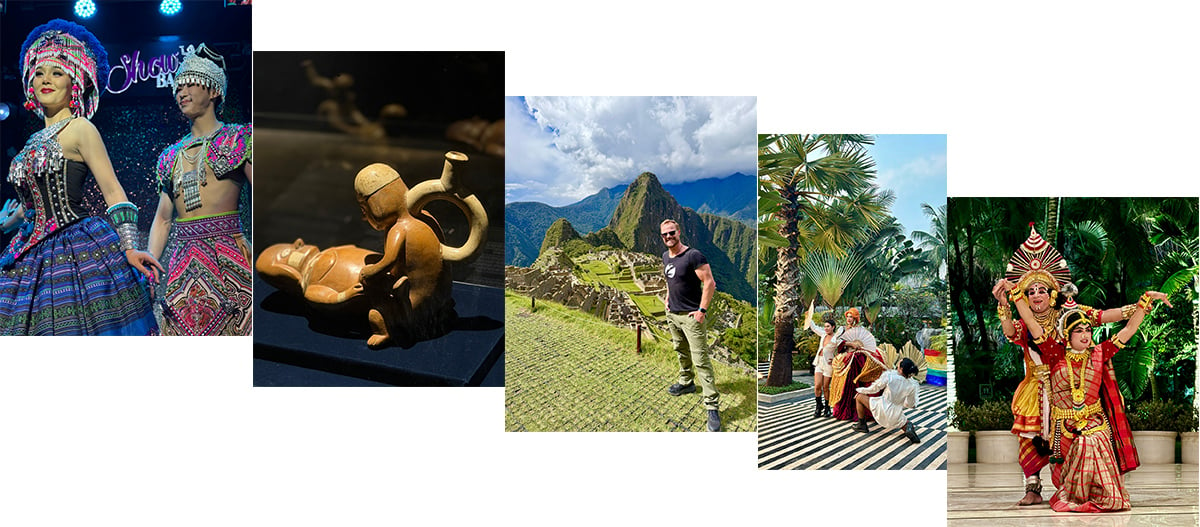
Even before the colonial era, the Incas had subtle expressions of same-sex relationships and fluid gender roles embedded in their culture. Some chroniclers note that certain rituals and festivals included same-sex partners as sacred participants, and gender diversity was acknowledged in ceremonial life. Queer lives were woven quietly into the social and spiritual fabric, even if official histories often ignored them. Visiting Cusco and the Sacred Valley today, you can feel echoes of these hidden stories amid the grand architecture and breathtaking landscapes — a reminder that queerness in Peru is as ancient as the Andes themselves.
JAPAN: The Way of the Wakashu
Centuries before Pride flags or pronouns, Japan understood that gender could be as fluid as ink on rice paper. The wakashu — young men with distinctive hairstyles and dress — were considered a third gender, admired and desired by both men and women. Edo-period art captures these tender relationships in scenes of courtship and beauty that are both sensual and spiritual.
At the Tokyo National Museum, you can find screens and scrolls that tell their stories — proof that Japan once celebrated love in all its forms, centuries ahead of the West.
GREECE: Love, Gods, and the Original Gay Icons
Ancient Greece wasn’t shy about same-sex love — it sculpted it into marble and sang it into myth. But beyond the textbook tales, quieter sites reveal the soul of queer devotion: the island of Lesbos, where Sappho’s verses still pulse with longing; or Delphi, where androgynous oracles blurred the line between human and divine.
Here, love wasn’t a scandal — it was sacred, carved into the foundation of Western art and philosophy itself.
Alexander the Great is widely believed to have had a romantic and deeply emotional relationship with Hephaestion, his childhood friend and general. Ancient sources like Plutarch describe their bond as one of profound love, comparing it to that of Achilles and Patroclus from Greek mythology—a pair often interpreted as lovers
THAILAND: Temples and the Third Gender’s Timeless Reign
Beyond Bangkok’s neon pulse and Chiang Mai’s mellow cafés and timeless temples, Thailand’s queer roots run deep. In 17th-century Ayutthaya, King Narai’s royal court mingled with foreign emissaries in a setting that made space for all forms of love. Ancient myths celebrated gender-shifting deities like Ardhanarishvara — half man, half woman — symbolizing the unity of opposites.
Today, that same fluidity hums beneath the surface of Thai culture. A night in Bangkok’s Silom Soi 2 might feel modern, but its soul is timeless — a country that never treated queerness as foreign, only human.
CAMBODIA: Apsaras and the Hidden Grace of Desire
When the sun rises over Angkor Wat, few visitors notice the quieter stories carved into nearby temples like Banteay Srei — scenes of gods who change gender and lovers who defy definition. Ancient Khmer mythology blended Hindu and Buddhist ideas where identity was fluid, divine, and celebrated.
That spirit lives on in Phnom Penh’s drag collectives and Siem Reap’s inclusive art bars, where performers channel the same confidence as the deities who once adorned temple walls.
VIETNAM: Silk, Spirits, and Gender-Bending Legends
Vietnam’s beauty isn’t just in its landscapes — it’s in its poetry. The 18th-century poet Hồ Xuân Hương used sly double meanings to celebrate female desire and autonomy in a world that expected silence. Her verses were rebellion disguised as art.
Today, you can still feel that spirit in Hanoi’s teahouses and Saigon’s underground art scene, where queerness is expressed with elegance, wit, and quiet fire.
INDIA: Gods, Genders, and the Dance of a Thousand Loves
Long before colonial laws outlawed love, India celebrated it. The Kama Sutra described same-sex intimacy with frankness, while the temples of Khajuraho and Konark immortalized it in stone. Hindu mythology is full of deities who swap genders or embody both — from Shiva’s half-female form Ardhanarishvara to Vishnu’s enchanting transformation into Mohini.
After the 2018 decriminalization of homosexuality, India didn’t just reclaim a right — it reclaimed its history.
SRI LANKA: Hidden Currents on the Island of the Moon
Sri Lanka’s sacred texts and temple art hint at a past far more fluid than modern society might admit. Ancient spirits and deities shifted between genders, representing balance and protection.
Today, Colombo’s queer creatives are writing the next chapter — through film festivals, poetry, and gatherings that celebrate identity as both protest and heritage.
SOUTH AFRICA: Pride and Protest Beneath the Southern Cross
Before colonialism, queerness wasn’t a rebellion here — it was simply part of the fabric. Among the Shangaan, young men known as inkotshane sometimes lived as wives to warriors, a respected tradition.
Modern South Africa became the first African nation to legalize same-sex marriage, but its true queerness is older — found in tribal songs, in the art of resistance, and in the laughter that fills Cape Town’s rainbow-hued bars.
KENYA: Love in the Shadow of the Savannah
Among the Kikuyu, Kamba, and Nandi peoples, women once married women to preserve family lineage — a practice both pragmatic and respected. British rule erased much of that nuance, but the stories survive.
In Nairobi, queer artists are reviving those memories through fashion, photography, and underground clubs that pulse with defiance and pride. Kenya’s queer future is bold, but its roots are ancient.
RWANDA: Healing, Rebirth, and the Unspoken Love Stories
In Rwanda, where storytelling is an art form, tales of same-sex devotion have long been passed down quietly. Some precolonial communities accepted gender-nonconforming people as part of life’s natural diversity.
Today, Kigali’s queer youth are reclaiming those narratives through poetry slams and rooftop performances — transforming whispers of the past into songs of selfhood.
EGYPT: Love Beyond the Nile
Long before the word gay existed, Ancient Egypt left quiet traces of same-sex love carved in stone. The most famous are Khnumhotep and Niankhkhnum, royal manicurists who shared not only a profession but a tomb—an honor typically reserved for married couples. Their walls show them embracing, nose-to-nose, in one of history’s earliest depictions of male affection. Even the gods weren’t immune to queer undertones: in myth, Horus and Set’s power struggle included an erotic encounter, blurring the line between dominance, rivalry, and desire. Beneath the golden sands, love in all its forms was immortalized—subtle, sacred, and centuries ahead of its time
Queer history doesn’t live in just one place — it’s everywhere, stitched into every era, language, and landscape. When we travel to uncover it, we aren’t just tourists. We’re time travelers, reclaiming stories that were always ours. Because queerness didn’t start at Stonewall — it’s always been here, just waiting to be found.