

By: Laura Moreno
The great Renaissance woman, Mexican nun Sor Juana Inés de la Cruz (1651–1695), has long been celebrated in the Spanish-speaking world as the “10th Muse.” Sor Juana was a completely self-educated playwright, poet, painter, scientist, musician, composer, and philosopher. Her intellectual brilliance and accomplishments were unmatched, yet only her writings published in Spain have survived.
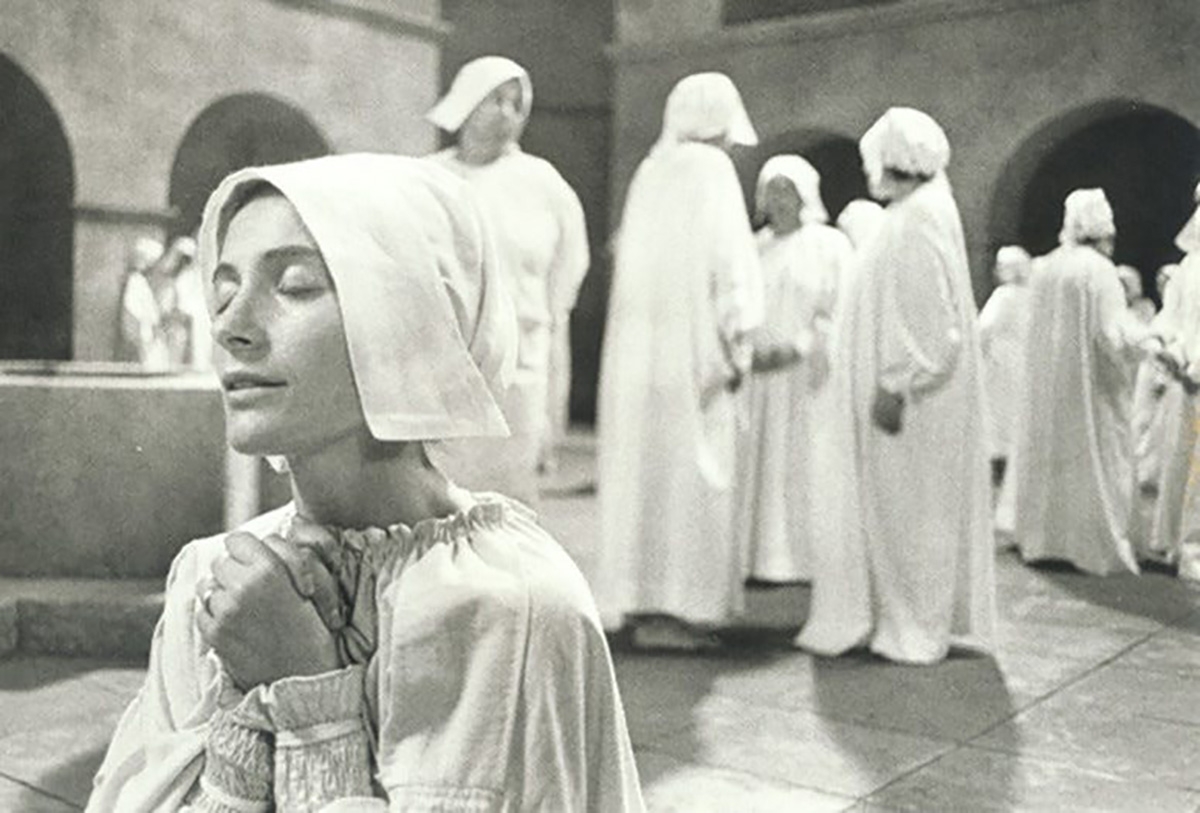
One of the most compelling insights into her life comes from the 1990 film “I, the Worst of All” (“Yo, la peor de todas”), directed by María Luisa Bemberg and starring Assumpta Serna. The film is based on extensive groundbreaking research at long last uncovered and published by Nobel Prize laureate Octavio Paz in Sor Juana: Or, the Traps of Faith, 1988 by Harvard University Press (translated from Sor Juana: Las Trampas de la Fe, 1982). Through Paz’s work, long-hidden details about Sor Juana’s life, particularly her intellectual and spiritual conflicts, were brought to light.
The film, selected as Argentina’s entry for Best Foreign Language Film at the 63rd Academy Awards, adeptly conveys the misery and contentious atmosphere of the Counter-Reformation and the Inquisition that dominated the time in Mexico.
Sor Juana impressed the royal court with her unsurpassed intellect and artistic achievement. But it was her charisma and charm that helped the legendarily beautiful LGBT nun win the heart of the wife of the Viceroy of New Spain (played by Dominique Sanda). The Virreina personally had Sor Juana’s manuscripts published in Madrid, securing her place in history.
The legacy of Sor Juana de la Cruz endures as one of the greatest intellectuals of the Spanish Golden Age.
“First Dream” & female education
Written around 1685, Sor Juana’s epic poem “Primero sueño” is widely regarded as her greatest work. It is also one of the most important philosophical poems of the time.
“Primero sueño” describes the soul’s nocturnal ascent as it attempts to comprehend the totality of knowledge: nature, the cosmos, and the divine, only to fail at dawn, when the body awakens and reason collapses under its own limits.
Strikingly, God is not the poem’s center. Instead, human reason itself becomes the protagonist, boldly striving and ultimately confronting its limitations. Descartes also wrestled with the limits of human reason, which is always dependent on the quality of known facts.
In this sense, “Primero sueño” is radically modern. It presents knowledge not as revelation granted by authority or revelation, but hard-won through rational inquiry. The poem’s conclusion is not defeat but clarity, an acceptance of intellectual limits and an unbroken commitment to inquiry, making “Primero sueño” Sor Juana’s most profound statement on learning, freedom, and the transgressive act of knowledge.
Unlike other Baroque epic poems, which often center on heroic action or conquest, Primero sueño replaces the hero with interior consciousness itself. There is no battle, no external conflict; only the mind and the pursuit of knowledge.
To Octavio Paz, Primero sueño is her pivotal work because it is the one place she speaks frankly, with no mask. Here she articulates her deepest commitment to the freedom to know. For Paz, the poem reveals the true conflict of her life, not faith versus heresy, but intelligence versus imposed silence.
Toward the end of her life, Sor Juana got caught up in the Inquisition, defending women’s right to formal education and advocating for women’s right to serve as intellectual authorities so that women could educate other women. In 1691, the unusually conservative archbishop ordered her to stop writing, even though females were allowed to audit courses at the University of Mexico City and noble women had long been educated in Spain. Sor Juana repented and was forgiven, but she never wrote again and died soon after.
Today it’s largely forgotten, but the last name “de la Cruz” was historically given to children whose parents were not married, as in Sor Juana’s case. Curiously, for as unique and amazing as she was, she shares a name with two well-known people in history. Sor Juana de la Cruz Vázquez Gutiérrez was a Spanish nun whose great intellectual earned her a very rare dispensations to be able to preach the gospel despite being a woman. And St. Juan de la Cruz is a widely read author of the Spanish Baroque.
The film is a reminder that history is a process of working our way out of the darkness.
The film “I, the Worst of All” (“Yo, la peor de todas”) is available for free at: https://youtu.be/Hya-GbDw7jU