

By: Laura Moreno
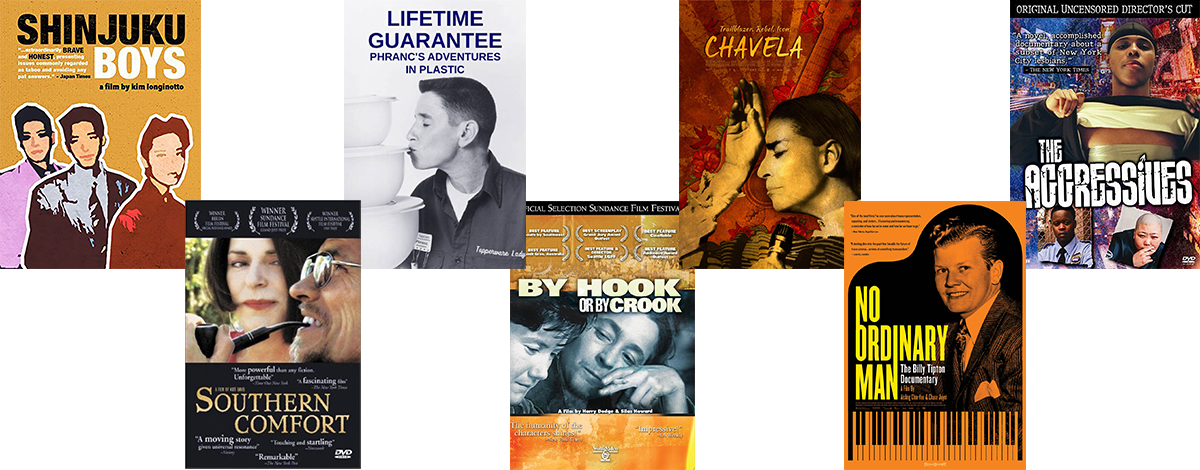
From the vibrant ballroom and Kiki scenes of New York City to healthcare disparities to intimate tales of transmasculine friendship and survival, these 7 groundbreaking films celebrate rarely depicted masculine identities of queer and gender non-conforming trailblazers.
“Shinjuku Boys” (UK, 1995)
“Shinjuku Boys” offers a candid look at Japanese AFAB (assigned female at birth) through the eyes of three friends who work at Tokyo’s New Marilyn Club, a nightclub where straight women can socialize with transgender men, and talk openly and freely. The film explores Tokyo’s hidden gender bending nightlife, taking an upfront look at the experiences of Shinjuku Boys in redefining masculinity, love, and identity with unflinching charm and vulnerability.
“Southern Comfort” (US, 2001)
This important film documents the the final year of Robert Eads, a transgender man diagnosed with ovarian cancer in 1996. Following his diagnosis, more than 20 doctors refused to treat him, citing fear that his transgender identity would harm their practice. By the time he received care at the Medical College of Georgia, the cancer had metastasized, and his prognosis was poor. The film documents Eads as a victim of systemic medical transphobia but also as a beloved elder within his “chosen family,” culminating in his final appearance at the Southern Comfort Conference in Atlanta. “Southern Comfort” won the Grand Jury Prize at the 2001 Sundance Film Festival and remains a significant work highlighting the healthcare disparities confronting the transgender community.
“Lifetime Guarantee: Phranc’s Adventure in Plastic” (US, 2001)
This uplifting documentary is about the folk singer Phranc, a Jewish butch lesbian folk singer and super-salesperson for Tupperware. Variety described Phranc as a “1950s sitcom-dad-styled androgyne hawking kitchenware to housewives.” The film explores her unique public persona, highlighting the charm of her performance. She seamlessly blends her art, activism, and entrepreneurial spirit and manages to create an outrageously successful career on her own terms within the most conventional of American institutions.
“By Hook or by Crook” (US, 2001)
“By Hook or by Crook”, co-directed by Harry Dodge and Silas Howard, traces three weeks in the life of a gorgeous, small town trans man with a unique outlook. Soon after he moves to the city, he meets Valentine and the two embark on a beautiful friendship. This landmark independent film was one of the first feature films to be co-written and co-directed by transgender men. It premiered at the Sundance Film Festival and is celebrated for its authentic, low-fi portrayal of transmasculine friendship, survival, and chosen family, capturing a specific moment in queer cinema history with raw humor and emotional depth.
“The Aggressives” (US, 2005)
This documentary features several butches, studs, and masc people of color from New York City’s vibrant ballroom and nightlife scene, including actor Marquise Vilsón. The film documents their identities, relationships, and ambitions within the context of the Kiki scene, a younger offshoot subculture distinct from the more widely popularized ballroom scene that focuses more on community building, education and fun rather than competition. “The Aggressives” provides a glimpse into the often-overlooked experiences of masculine-presenting queer people of color.
“Chavela” (Mexico/US, 2017)
This film tells the amazing life story of Chavela Vargas, the internationally-known lesbian gunslinger singer and macho butch who dated both Frida Kahlo and Ava Gardner. The film traces her career from the 1960s to collaborating with Pedro Almodovar to winning a Lifetime Achievement Award at the Grammy’s. Born in Costa Rica, Vargas revolutionized Mexican ranchera music by performing in a masculine style, often wearing men’s clothing. Her career stalled for 15 years due to alcoholism before a triumphant comeback in the 1990s. “Chavela” features intimate interviews with Vargas, showcasing her raw talent and unapologetic spirit that made her a cultural icon worldwide.
“No Ordinary Man” (Canada, 2020)
The long overdue film “No Ordinary Man” re-examines the life of trans jazz musician Billy Tipton, leader of the Billy Tipton Trio and recording artist. When he died in 1989, his secret identity was discovered, fueling sensational headlines in the press. This film aptly corrects the narrative after his passing that framed his story as a life of deception, and celebrates the life of a great musician. The film is a celebration of his life, musical talent, artistic achievement, and legacy.