

By: Laura Moreno
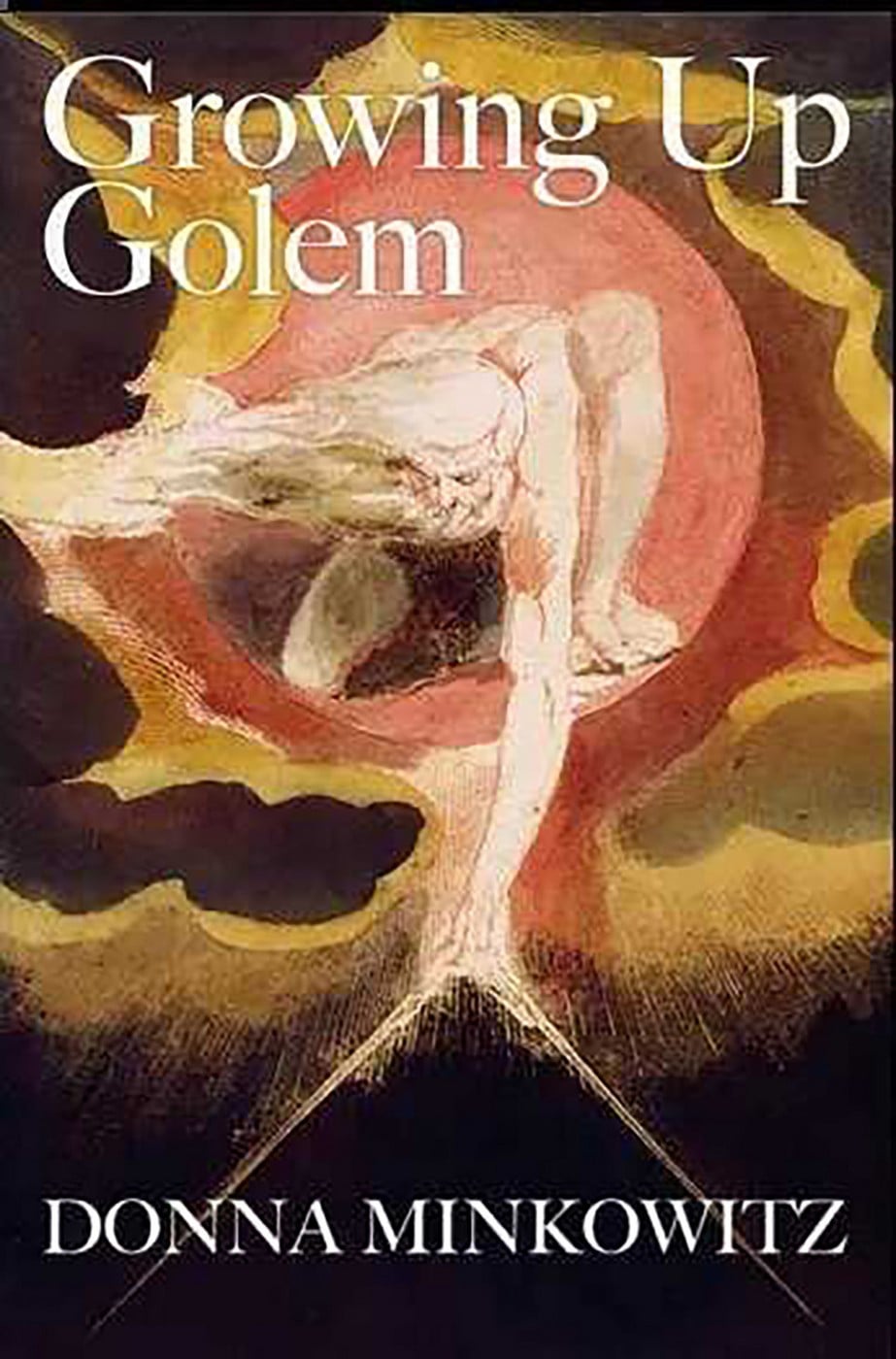
Blending dark humor with candor and real insight, “Growing Up Golem” is a captivating and important memoir by Donna Minkowitz that boldly explores the complexities of growing up Jewish. The book examines her trauma, sexuality, and self-invention.
“Growing Up Golem” opens with Minkowitz recounting her early years growing up in Brooklyn. The memoir’s honesty is brutal. Much of it leans into near-caricature stereotypes. Yet Minkowitz, a secular Jew who admits to feeling more lesbian than Jewish, has no interest in protecting cultural sensitivities; her focus is on truth telling, and let the chips fall where they may.
The result is a very fascinating revelation, a rare attempt to delve into the psychological forces that have shaped this troubled community in an attempt to finally bring healing.
The act of writing the memoir itself can be seen as an exercise in recreating the debasement of her childhood by publicly airing “dirty laundry,” but it is also self-creation. Exposure of private trauma is done in service of a larger purpose. A problem cannot be addressed until it is acknowledged and understood.
Donna Minkowitz is a talented journalist who has written for The New York Times and was a columnist for The Village Voice. Her book “Ferocious Romance: What My Encounters with the Right Taught Me About Sex, God, and the Culture Wars” (2007) showcases her ability to tackle complex social and personal issues with depth and humor. Minkowitz’s unflinching honesty and powerful writing makes her a distinctive voice.
An exploration of self
With a working class father who was a part-time pimp’s assist, her parents cast long shadows over her life. With a penchant for cruelty, her father’s outbursts created confusion, “I didn’t remember which words of mine made him do it,” she writes. In particular, she remembers fear at the sound of jangling keys when he returned home and feeling unsafe in his presence. His struggle to reconcile his own past with the expectations placed upon him by family and culture replays itself in Minkowitz’s own life.
But her controlling mother’s psychological conditioning had a far deeper impact on her and seems to be the root of her self-destructive patterns.
As a child, the author became extremely disconnected from her own body to the point of being utterly unable to perform simple physical tasks like skipping rope.
Minkowitz portrays herself as a golem “created” by her mother, who claimed occult Kabbalistic magic powers. The myth aptly reflects Minkowitz’s own feelings of being molded into a subhuman version of herself by the forces of family and tradition. This is an element of magical realism, you might say, inspired by the Jewish legend of the golem, a soulless being made from clay by a rabbi and brought to life to protect the Jews. Because it has no soul it can freely kill those who would harm the Jews, but the golem often becomes uncontrollable, like Frankenstein.
Minkowitz actively leans into the debasement of being a golem, essentially a slavish creature. She describes her father and herself as “monsters” created for her mother’s purposes. She accepts her assigned role as an unfeeling, subordinate being. The golem metaphor lets her justify selfish or cruel actions as part of her conditioning, while also charting a painful, at times satirical path to autonomy. It’s a survival mechanism.
A significant part of Minkowitz’s exploration centers on the notion of self-creation, of choosing one’s path rather than simply following the mold set by others. This is especially apparent in the way the author reflects on her sexuality and gender identity.
Another surprising revelation she makes is that pleasuring oneself was never pleasurable,a complaint that occasionally appears for the descendants of holocaust survivors.
As an adult, Minkowitz recounts a series of degrading one-night stands and “really bad dates” that echo the powerlessness of her childhood. She describes seeking out encounters that are emotionally or physically bruising, reenacting the dynamics from her upbringing.
When a date snootily informs her that she was not her first choice, she writes: “Because I knew that a large part of me was composed of fecal matter that had been sung to with the dulcet melodies of Romania, I didn’t mind. I felt lucky to be dating Jen at all. I had spent my entire time at Yale and the two years afterwards not having any sex at all.”
“Growing Up Golem: How I Survived My Mother, Brooklyn, and Some Really Bad Dates,” originally published in 2013 by Riverdale Avenue Books / Magnus Books, is being re-released by Indolent Books more than a decade after its publication. The book was originally shortlisted for a Lambda Literary Award and the Publishing Triangle’s Judy Grahn Nonfiction Prize.
‘Growing Up Golem: How I Survived My Mother, Brooklyn, and Some Really Bad Dates’ by Donna Minkowitz, $16
http://www.indolentbooks.com