

By: Pepe Torres


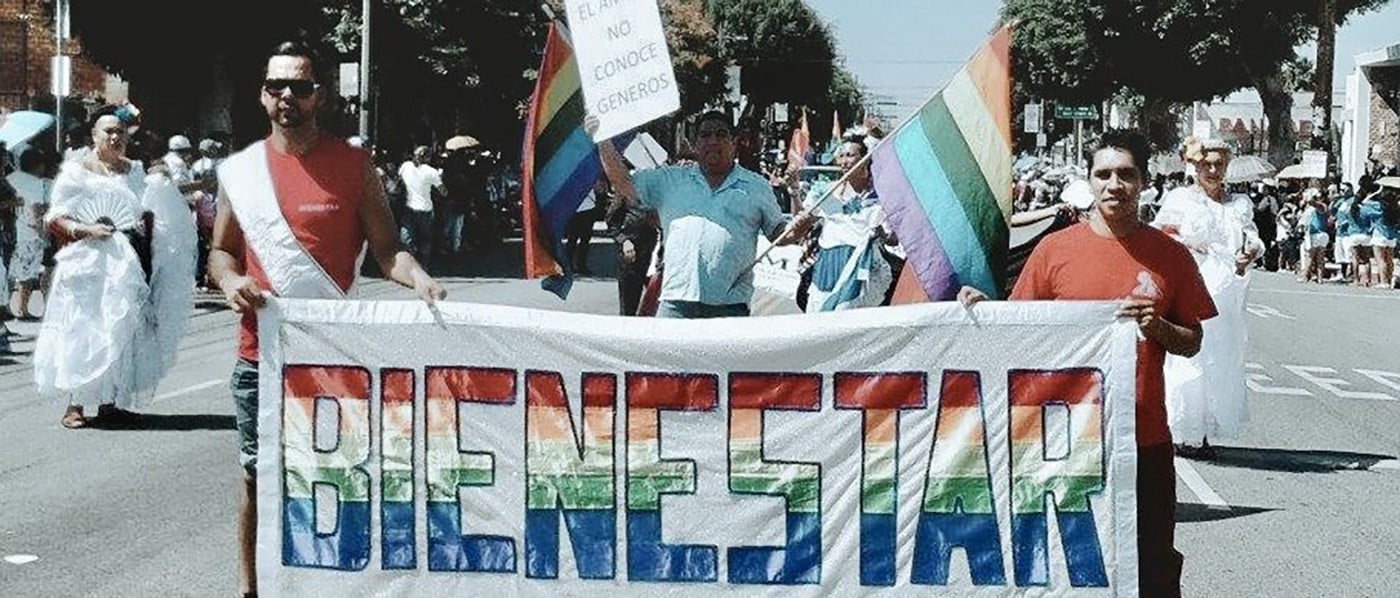
BIENESTAR is a community-based organization serving Greater Los Angeles with a focus on identifying and addressing health issues faced by Latinx and LGBTQ+ populations. BIENESTAR says it reaches these communities through innovative and compassionate peer-to-peer modeling that is culturally relevant to those they serve. BIENESTAR is visible in the community, providing free HIV testing at nightclubs, giving presentations at local colleges, and sharing health and social services resources and information at health fairs and other events.
BIENESTAR employs a diverse staff that meets clients with understanding and acceptance, building trust and fostering a sense of community for those who use services. Bienestar’s education and support programs encompass HIV/AIDS prevention, STI testing and treatment, mental health services, substance use, and harm reduction. All of the organization’s services are offered to the community for free.
Bienestar Human Services is committed to enhancing the health and well-being of the Latino community and other underserved communities in line with its mission. This history of the agency dates back to the mid 1980s when local activists began to notice the alarming trend that unprecedented numbers of Latinx friends, colleagues, and acquaintances were dying from HIV/AIDS. The interests and work of those activists led to Bienestar Human Services being founded in 1989 as a direct response to the lack of resources available to the community at the height of the AIDS crisis.
Today BIENESTAR has grown into a Community Health Center breaking down barriers to care for communities of color disproportionately affected by health disparities. In early 2020, Clinica BIENESTAR opened its doors, serving more than 500 patients and 1,000 visits, alongside the 16,000 BIENESTAR clients who access a spectrum of their services.
For nearly four decades, BIENESTAR has continued to grow as a solution toward health equity and social justice for Latinx, LGBTQ+, and other underserved people. The organization continues to strive to remove barriers to care by addressing stigma, discrimination, homo & transphobias, immigration issues, and isolation that contribute to poor health outcomes. BIENESTAR believes achieving health equity, and social justice is a right for “our family, our community, our future, and your well-being, tu Bienestar”.
Men’s Health – BIENESTAR provides various programs geared toward the health and well-being of men, LGBTQ+ people, and individuals living with HIV/AIDS. Due to the historical lack of services available to the Latinx community throughout the HIV epidemic, BIENESTAR began removing barriers to resources and alleviating the stigma surrounding HIV prevention and treatment. The agency’s DeAmbiente programs bring equitable solutions to underserved populations through Telehealth, Internships, Game nights, HIV & STI Testing, Treatment and Prevention, Peer Mentoring, Volunteering, Community Service, Career-building Workshops and Counseling.
Decisiones, This HIV & STI prevention program supports men newly diagnosed or returning to HIV care. The program includes two individual sessions, community forums addressing viral suppression, and support activities.
Trans Health: Bienestar’s Transgeneros Unidas (TU) was founded in 1997, the first transgender Latinx support group in Los Angeles County. TU provides resources and support services to the transgender community. BIENESTAR provides the following services to the transgender community: Mental health counseling, Career-building workshops, Community nights, Linkage to medical care, HIV testing, PrEP services and Emergency housing resources.
TRANSFORMANDO VIDAS, focuses on serving the needs of transgender women of color in South Los Angeles. Through peer mentorship programs, a dress for success program, legal forms, mental health services, transgender community nights, and navigation services, transgender women of color have the opportunity to acquire skills to integrate into the community.
HERMANAS, is an HIV & STI prevention program for transgender women who reside in Los Angeles County. The program includes three group sessions focused on community-building, supportive services, and friendship. At the end of the program, participants attend a Trans Empowerment Retreat which equips attendees with the tools needed to become the next agents of change.
Trans Wellness Center, The Trans Wellness Center (TWC) provides comprehensive resources and services for transgender and non-binary people. BIENESTAR is one of the six organizations working in the collaboration in the county to provide navigation services, mental health services, emergency housing, youth housing, PrEP/PEP education, linkage to free HIV/STI testing, and more.
Food Bank Services provides ongoing food assistance for low-income individuals living with HIV/AIDS. The agency understands that food availability and good nutrition are essential for people living with HIV to achieve health. The BIENESTAR Food Bank is an equitable solution for those suffering from food insecurity and also living with HIV/AIDS. Their program is located at their East Los Angeles offices at 5314 E. Beverly Blvd., Los Angeles, CA, 90022.
Housing Support Services, BIENESTAR works with Housing Opportunities for Persons with AIDS (HOPWA), a short-term assistance program that provides community members with emergency help with rent, mortgage, utilities, and assistance with the first month’s rent, security deposit, and utility connection fees. Please call them for support at (866) 590-6411 ext. 202.
Mental Health Counseling, Mental health disorders are often among the most commonly misunderstood conditions in many communities. When people do not understand mental health and disorders, it often makes it harder for them to know how to find help if they need it. Mental health disorders can be genetic, can arise from life experiences and trauma, the loss of a loved one, a history of substance use, or many other factors. BIENESTAR offers individual, partner, or family therapy sessions, social support groups and specialized groups for people living with HIV or for transgender persons.
Support groups can be an important resource for the community and these are abundant at Bienestar. If you’re looking for a sense of community, family or want to find people who share similar life experiences as you, then a BIENESTAR support group may be for you. Groups are offered for Gay and Bisexual Men, Transgender Women, LGBTQ (Lesbian, Gay, Bisexual, Transgender & Queer) Youth, People living with HIV/AIDS, People dealing with Substance Abuse disorders, Spanish-speaking LGBTQ people. If you would like more information about their support groups, contact one of their centers nearest to you by calling (866) 590-6411.
Substance use disorder assistance, Substance use refers to anytime someone consumes or uses alcohol or drugs. According to the agency, using alcohol or drugs is not always negative, but for some people, the use of alcohol and drugs can become harmful for them or those around them. This is known as substance abuse. BIENESTAR offers various substance use programs and services to help improve people’s quality of life by working closely with clients to help them improve behavior and psychological well-being.
Harm Reduction Center, BIENESTAR operates a Harm Reduction Center and drop-in site at 5400 E. Beverly Blvd. in East Los Angeles, where its Syringe Service Program meets people who use drugs with compassion and without judgment. Staff provide sterile supplies and safe syringe disposal, naloxone kits with overdose prevention and response training, fentanyl test strips and safer-use information, HIV and Hepatitis C testing with linkage to care, medication for opioid use disorders, abscess and wound care, and mental health and substance-misuse counseling. The program works to reduce new HIV and Hepatitis C infections, prevent fatal overdoses, and lower the stigma surrounding drug use. Services are available at the center during limited weekday hours with a midday closure, as well as through street-based mobile sites and backpack outreach across Los Angeles County.