

By: Laura Moreno


“The Testaments” is Hulu’s sequel to the well-known series “The Handmaid’s Tale,” based on the 1985 book. Set 15 years later, it tells the story of how a heavily indoctrinated teenage girl begins to learn to think for herself. This series is a dystopian thriller about the horrors of living in a tyrannical theocracy.
In the suffocating world of Gilead, where every thought is policed and every possible future predetermined, “The Testaments” narrows its focus considerably from the broad, violent struggle of its predecessor. The new series takes place within the intimate, treacherous terrain of an elite prep school.
Based on Margaret Atwood’s powerful 2019 novel also called “The Testaments,” and adapted for television by Showrunner Bruce Miller and a team of writers, the series features impeccable performances. It is a tense, nuanced exploration of how oppression and privilege in a corrupt system often go hand in hand.
In the final episode, just released on May 27, 2026, the dour prison guard approaches a cell with Aunt Lydia and lo and behold, the guard is author Margaret Atwood, nearly 87 years old, making a cameo appearance! Cast members have since described Ms. Atwood as “scary” in character, which doesn’t quite come across on film, but “sweet” off-camera. Margaret Atwood herself quipped that her role was “scowly.”
Life-altering solidarity
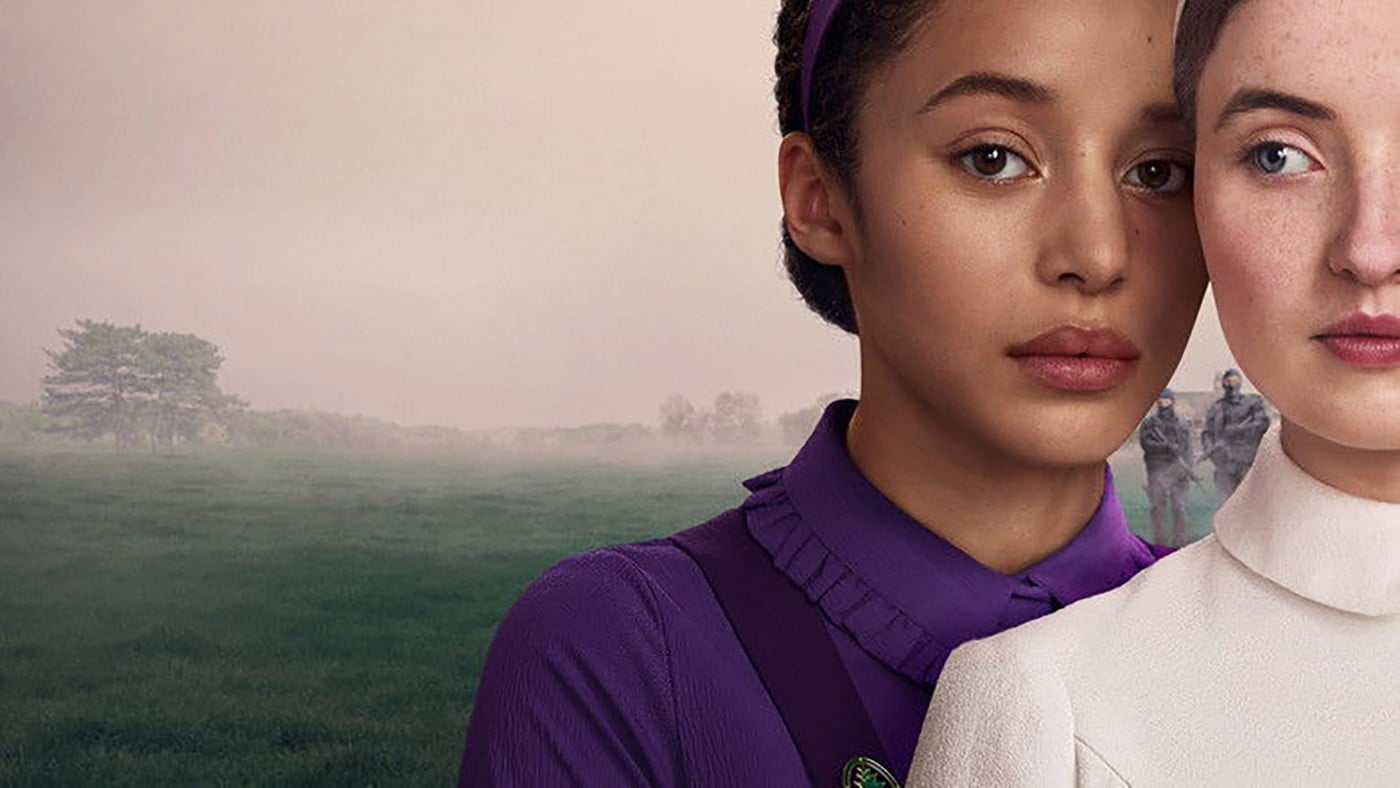
The plot revolves around Agnes MacKenzie (played by Chase Infiniti), a student at Aunt Lydia’s academy. She is known by her deep purple uniform as holding the status of a “Plum,” one of Gilead’s chosen.
Although her life may appear comfortable, a far cry from the suffering of the Handmaids, it is a gilded cage. As daughter of a top commander, she wants for nothing, and has been schooled to become a commander’s wife. But the series masterfully captures the dread of adolescence intertwined with the grotesque anxieties of living in Gilead, awaiting eligibility for the chattel marriage market.
It’s through Agnes’ eyes that the audience experiences the horror of her situation and the flicker of her defiance against it.
Her deeply personal struggle is linked to the larger narrative of Gilead’s inevitable downfall. Ultra-conservative societies are built on hypocrisy, a fear to be human, and therefore are necessarily on borrowed time. Gilead is a mafia state with a thin veneer of religiosity, like the mafioso who takes pride in his Catholicism and family values while undermining actual families through his criminality.
The dynamic shifts with the arrival of Daisy (Lucy Halliday), a Pearl Girl from Canada, a foreign missionary for Gilead, who will be mentored by Agnes. Daisy’s forthrightness and painful past become catalysts for Agnes’s eventual awakening. As the two teens grow closer, their bond challenges the rigid strictures of their world.
The series brings the novel’s queer subtext to the fore, exploring the fierce, life-altering solidarity that forms between them.
What makes “The Testaments” compelling is its realistic portrayal of complicity and the slow, painful process of unlearning indoctrination. Nonetheless, Agnes and her friends are not saints. The show does not shy away from this, even as fans root for their liberation.
It is a story about finding solidarity against the subtle, internalized prejudices of their own upbringing.
The tension builds not through action, but through whispered conversations, meaningful glances, and the constant, suffocating pressure of a society that demands their complete submission.
“The Testaments” is a powerful television adaptation of a literary masterpiece, but it is not an easy watch. Nor does it offer the catharsis of its popular prequel. But it does dig deep beneath the surface into the psychology of a world built to erase individuality, and the shared glances and hesitant confessions, radical acts out of which a new self is mapped out by those who dare to forge their own truth. It is in this internal revolution that “The Testaments” finds its haunting, unforgettable hope.